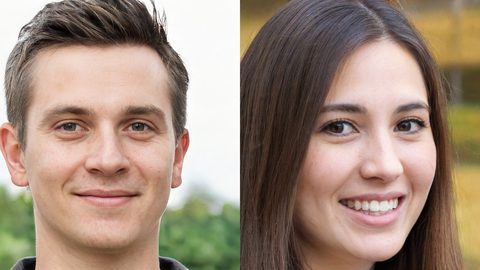
Spotting Deepfake Videos: Artefacts, Lip-Sync Errors, and Disappearing Tells
Learn the visual artefacts that can reveal a deepfake video—lip-sync errors, lighting mismatches, skin texture—and why these tells are disappearing as AI models improve.
The Wrong Question Most People Ask
When a video might be a deepfake, most people ask the wrong question. They ask: does the face look real? The generative AI industry has spent five years making that question irrelevant. The face will look real. Skin texture holds up. Facial movement tracks. The question that still works, for now, is whether the face behaves like a face in a real physical space. This page names the specific artefacts you can still look for today: lip-sync drift, irregular blinking, skin texture blurring at the jawline, scene light that does not match the face. Then it tells you, for each one, why newer models are already fixing it. Hold onto one premise. Knowing how to spot a deepfake by its visual artefacts is a skill with a shelf life measured in months, not years. The real skill is learning to stop trusting your eyes and start checking the source.
The Lip-Sync Drift That Still Happens
Start with the mouth. When deepfake speech audio does not match the phonemes in the video, you can catch the lip-sync mismatch without any tools. Nanyang Technological University researchers found in 2021 that audio leads or lags video by more than 100 milliseconds, and the drift increases over the duration of the clip. What does 100 milliseconds look like? It is the difference between a 'p' sound landing on closed lips and landing a half-beat after the lips have already opened. Watch the jaw more than the lips. The jaw is a hinge; it moves with the vowel, and it is the last thing the AI models learn to control.
But here is the uncomfortable part: the newer the model, the smaller the drift. The audio-visual synchronisation problem is one of the most heavily funded areas in the field, precisely since it is the tell that survives the longest. The models now train on thousands of hours of talking-head video with the audio and video forced out of sync on purpose, so they learn to produce mouth movements that land on the phoneme. The drift is still there in the cheap tools, the ones that run on a single GPU and produce a face that moves a few frames behind the words. The expensive models, the ones you will see used in a convincing political hoax, have largely solved it. So the lip-sync check is now a screen, not a wall: it catches the sloppy fakes, and it lets the good ones through.
Blinking, Eyes, and the Neural Net's Blind Spot
What The Blink Rate Tells You
University at Albany researchers documented in 2018 that deepfake subjects blink at a rate significantly lower than the human average of 15 to 20 blinks per minute, and the timing is irregular. The neural networks that generate faces are trained to reconstruct a face, not to blink it. Blinking is a disruption to the reconstruction, a moment where the eyes disappear and then reappear, and the network has to invent the information. Early models avoided the problem by making the subject blink rarely, and the result was the classic uncanny stare. University of California, Berkeley researchers added in 2019 that the pupils may be non-circular, mismatched in size, or lack consistent light reflections across both eyes. The DARPA Media Forensics program found the same year that the eyes may appear fixed or track incorrectly when the head turns.
The Saccade Glide That Still Gives It Away
Here is the thing about the blinking tell: it is on its way out. The models that use a separate eye-generation module, or that train with a blinking loss function, now produce eyes that close and open at near-normal rates. The pupil geometry is still slightly off under hard light, but you will not see it on a phone screen. What you can still catch is the saccade problem: human eyes do not move smoothly when they track a moving object, they jump in tiny micro-movements called saccades. The models still produce a smooth glide. It is a tiny thing, a fraction of a second of wrong motion, and it is the kind of tell that takes a trained eye to spot. If you are not a forensic video analyst, the eyes will not save you. Use them as a check, not as your primary weapon.
Skin Texture and the Jawline That Melts
High-Frequency Detail Regions
Look at the jawline, the hairline, and the ears. Adobe Research documented in 2022 that beards and moustaches appear painted on, lack individual strand detail, or flicker across frames. The same team found that individual teeth may appear fused, lack defined edges, or show an inconsistent number across frames. These are high-frequency detail regions: lots of edges, lots of thin structures, and the generative model has to decide, for every frame, whether to spend its limited detail budget on the hair or on the teeth. The result is a texture that blurs, especially when the head turns and the light shifts across the surface.
Where The Scene Light Betrays The Face
This is where the deepfake illumination inconsistencies show up most clearly. SUTD researchers showed in 2020 that shadows on the face do not match the direction, colour temperature, or intensity of the scene's light source. The face is generated, so it has its own implicit illumination, and when the scene has a strong key light from the left, the generated face will often be lit from the front or from the right. The skin texture uniformity is the related tell: real skin has pores, fine lines, and subsurface scattering, where light penetrates the skin, bounces around, and re-emerges in a redder, softer form. Generated skin is often too smooth, too matte, too even. The Facebook AI team added in 2020 that transient artefacts, blurring, or pixelation appear at the edges of the face, especially during head turns.
The warning that comes with all of this: the detail budget is the frontier. The laboratories at Google, Meta, and OpenAI are all chasing the same target, a model that allocates its detail exactly where a human eye looks. The jawline blur that you can see today on a 4K screen will be gone in a generation. The teeth that fuse together will separate. The hair that flickers will stabilise. None of these tells will last.
Lighting Inconsistencies and the Background That Breathes
The Composite-Cheat Tell
When the face is generated separately from the surroundings, the two pieces of the image are lit by different light sources. The face has its own implicit illumination, learned from the training set, and the backdrop has the actual light of the scene. The face and the backdrop do not sit in the same visual space. Sensity AI noted in 2021 that the setting may show warping, flickering, or static patches that do not match the subject's movement. The scenery does not move with the head tilt. It does not blur when the subject moves quickly. It sits there, unnaturally still, while the face does the moving.
This is the tell that survives the longest since it is not about the face at all. The models have gotten very good at generating a face. They have gotten less good at generating the entire scene, with all its physical constraints, consistently across a video. The backdrop is where the model cheats, and where it gets caught. The compression artefacts that Google Research flagged in 2022, blocking, banding, and ringing concentrated around the face but absent from the setting, are the fingerprints of this shortcut. The model compresses the face harder since it is spending its bits on the detail, and the backdrop gets a free pass. The result is a picture where the face is sharp and the surroundings are soft, which is exactly the opposite of what a real camera would do.
Why Full-Scene Generation Changes Everything
But here is the catch, and it is a big one: the backdrop tells only work when the video is a composited fake. The new class of generative video models, the ones that create the whole scene from a prompt, do not have this problem since there is no separate setting to mismatch. The entire frame is generated together, so the light is consistent by construction. The Sora-class models produce footage where the face is lit like the room, since the room is also generated. This is the direction of travel, and it means the illumination check will soon be as useless as the blink check. Use it while you can.
Why the Tells Are Disappearing
Every tell on this page has the same obituary notice written for it. The blink rate was fixed when researchers published the University at Albany finding and the models were retrained. The lip-sync drift is being fixed as the audio-visual synchronisation problem becomes a standard loss function. The skin texture is being fixed as the detail budget becomes the battleground of the next generation of models. The illumination is being fixed as the end-to-end generation of the entire scene removes the mismatch. This is the arms-race dynamic at the heart of deepfake detection. The detection work identifies a weakness, the results get published, and the generative models are retrained to close the gap. The half-life of a visual tell is roughly two years from publication to closure.
This is why a media literacy skill that depends on spotting artefacts is a skill that dies. The artefacts are moving targets. The skill that lasts is not the ability to see the artefact but the habit of checking the source. The Singapore Police Force issued an advisory on 2024-02-08 warning about deepfake scams, and their advice was not to study the pixels but to verify the request through a second channel. If a video shows a public figure making a claim, your first move should be to open a new tab and search for the figure's name plus the claim. That is lateral reading. If a credible source has not confirmed that this person said this thing, assume it is a fake until you have a source you can check. The Singapore government runs Factually, a fact-checking portal that publishes clarifications on false claims circulating locally. CNA runs Sure Anot, which examines viral claims in the region. These are the tools that outlast the artefacts. They check reality rather than pixels.
The Cheapfake Fallback
There is a category of fake that does not need AI at all. A cheapfake is media altered with simple tools: slowing down video, cropping out context, or mislabelling an old photo. The Singapore Police Force advisory that warned about deepfakes also warned about a video that was actually from 2011, recirculated to look current. The cheapfake is cheaper to make, harder to detect with visual inspection, and far more common than the deepfake. The most effective deepfake you will encounter is probably not a deepfake. It is an old video, stripped of context, with a false claim attached. The visual tells fail you entirely with a cheapfake. There is no synthetic generation to detect.
The detection of a cheapfake is a reporting exercise, not a visual one. Trace where the video came from. Run a reverse image search on a frame to see where the footage has appeared before. Read the original source to see if the claim matches the actual content. This is the real work of media literacy: not spotting artefacts, but verifying the chain of custody of the information. The MLC, the Singapore charity that runs public education campaigns, teaches the SURE framework: Source, Understand, Research, Evaluate. It is embedded in Singapore's school curriculum and public libraries. It does not depend on any specific technology, and it will still work when the deepfakes are indistinguishable from reality.
What Works When the Video Is Good Enough
When Your Eyes Fail
There will come a moment when the video is good enough that you cannot tell it is fake by looking at it. That moment is now for some clips, and it is coming for everyone. A study from NTU in 2021 found that the lip-sync drift could be measured, but it also found that human viewers missed it most of the time. The tools that can flag AI-generated video are improving, but they have a fatal flaw: the false positive. An AI detector that flags human content as AI-generated is worse than useless. It teaches you to distrust the tool. The study of AI detector false positive rates has shown that non-native English speakers are disproportionately flagged. You cannot build a verification system on a tool that cries wolf.
Follow The Motive
So what do you do when you cannot tell? Follow the money, or the motive. Who benefits from this video being believed? Is it a political opponent being taken down weeks before an election? Is it a celebrity being shamed to extort money? Is it a message that tells you to forward it immediately due to a deadline, an emergency, or a threat? The forwarding itself is the weapon. The message that tells you to forward it is the tell. The real human reach of a viral fake is not the original post, it is the thousands of worried parents, anxious voters, or angry citizens who pass it on without checking. The failure mode is verification bypass: sharing a claim with a comment like 'is this true?' without waiting for an answer, thereby amplifying the claim before verification.
Table: The Visual Tells and Their Lifespan
| Tell | What You See | Research Source | Still Reliable? |
|---|---|---|---|
| Lip-sync drift | Audio leads or lags video by >100 ms | NTU, 2021 | Yes for cheap tools, no for top models |
| Irregular blinking | Blink rate below 15-20 per min | University at Albany, 2018 | Being fixed, still visible in the wild |
| Skin texture blur | Pores and fine lines missing at jawline | Adobe Research, 2022 | Yes, for now |
| Lighting mismatch | Shadows do not match scene light | SUTD, 2020 | Fails on full-scene generation |
The Lateral Reading Habit That Beats Every Tell
The habit that survives is lateral reading. When a video shocks you, angers you, or delights you, your first instinct is to share it. Your second instinct should be to open a new tab. The technique is simple: leave the original content and check the source, the claims, and the context before you believe or share. You are not looking for confirmation that the video is real. You are looking for a source that has established the facts independently. The Singapore Police Force has a reporting channel: the ScamShield Bot on WhatsApp at go.gov.sg/scamshield-bot, where you can report suspected deepfake content. The scareware that claims to detect AI for you is not a substitute for doing the work yourself.
Reverse image search is the tool that outlasts the others. The tool may change, Google Images today, TinEye tomorrow, Yandex the day after, but the principle is durable: check whether an image has appeared before in a different context. An old photo of a politician with a new, false caption is the cheapest fake of all, and the reverse image search catches it every time. The Singapore government's Factually portal publishes clarifications on false claims, and it does so under the International Fact-Checking Network code, which requires visible evidence for every verdict. If a fact-check says something is false but does not show you the evidence, be sceptical of the fact-check. A verdict without reasoning does not build your own skill.
- Blink rate: Deepfake subjects blink at a rate significantly lower than the human average of 15-20 blinks per minute (University at Albany, 2018).
- Lip-sync drift: Audio leads or lags video by more than 100 ms, increasing over the clip duration (Nanyang Technological University, 2021).
- Skin texture: Skin lacks natural pores, fine lines, or subsurface scattering; beards and moustaches appear painted on (Adobe Research, 2022).
- Lighting mismatch: Shadows on the face do not match the direction, colour temperature, or intensity of the scene's light source (Singapore University of Technology and Design, 2020).
- Reporting channel: Report deepfake content via the ScamShield Bot on WhatsApp at go.gov.sg/scamshield-bot (ScamShield, 2024).
FAQ: The Five Questions That Matter
How can a non-technical person reliably distinguish an AI-generated image from a real photograph today?
You cannot, not reliably, and anyone who tells you otherwise is selling something. The visual tells change with every model update. Your realistic options are to check the source, look for the same image in a different context via reverse image search, and follow the lateral reading habit. The University at Albany blink rate study from 2018 is now old enough that the models have largely fixed it.
What is the difference between a deepfake and a cheapfake?
A deepfake is AI-generated synthetic media that replaces a person's face or voice. A cheapfake is media altered with simple tools: slowing down video, cropping out context, or mislabelling an old photo. The cheapfake is more common and harder to spot since there is no AI to detect. The most effective 'deepfake' you will encounter is probably an old video with a false claim attached.
Does the AI detector say this is fake? Can I trust it?
No. Independent testing shows false positive rates high enough to falsely flag human student writing as AI-generated, especially for non-native English writers. An AI detector that flags human content as AI-generated is worse than useless. It teaches you to distrust the tool. Use the tool as a hint, not as a verdict, and never rely on it alone.
What should I do if someone sends me a video that looks like a Singapore minister making a false claim?
Do not forward it. Do not watch it repeatedly to see if you can spot the artefacts. Open a new tab and search the minister's name plus the claim. Check whether Factually or Sure Anot has published a verdict. If they have not, wait. The Singapore Police Force issued an advisory on 2024-02-08 warning about deepfake scams, and their advice was to verify the request through a second channel, not to study the pixels.
What is lateral reading and why does it work?
Lateral reading is opening new tabs to check the source and claims before believing or sharing. It works since it does not depend on your ability to spot artefacts. It depends on your willingness to do the work of verification. The MLC teaches the SURE framework, Source, Understand, Research, Evaluate, which is embedded in Singapore's school curriculum. It will still work when the deepfakes are indistinguishable from reality. It does not rely on the artefacts being visible.
The Singapore Example You Should Know
Hold the Singapore Police Force advisory of 2024-02-08 in your mind. The advisory warned about a video that used a public figure's face and voice to promote a fake investment scheme. The video was not caught by a viewer spotting a blink artefact or a jawline blur. It was caught when someone checked the source, found that the government official had never said such a thing, and reported it. The advisory did not tell the public to study the teeth. It told them to verify the request through a second channel. That is the lesson: the detection happened through source verification, not visual inspection.
The reverse image search and the lateral reading habit are the tools that catch the cheapfake and the deepfake alike. They do not care whether the model was trained last week or last year. They do not fail when the lighting is consistent. They fail only when you skip them. No summary here. The takeaway is a behaviour, not a fact: when a video surprises you, do not forward it. Open a tab.