AI-Generated Content and Deepfakes: Honest Detection Limits and Practical Steps
An honest overview of what AI-generated content detection can and cannot do, routing you to specific guides for spotting deepfakes, checking images, and understanding voice cloning scams.
The Real Problem Is Not What You Think
If a voice call from your child pleading for help would make you reach for your wallet, stop reading this and memorise one rule. Hang up. Call them back. That single habit protects you more than any detection tool ever will.
Many readers arrive believing the hard part is finding the one tool that can spot a deepfake. That belief leaves you more exposed than any single piece of misinformation. Detection tools are useful. They are not the foundation of your safety. The foundation is a set of practices that do not rely on technology that changes with the next model release. Generative AI tools evolve faster than any detection method can keep up with. That speed is not an accident. It is the economic structure of the industry. Every new image, video, or voice model is trained on a larger dataset, and every improvement in realism makes the previous generation of detectors obsolete. A tell that works on Midjourney v5 will not work on v6. A detector trained on DALL-E 3 images will stumble on Sora's video output. Stake your ability to navigate this landscape on learning the latest visual artifact, and you are always one update behind. Stake it on habits of checking sources, and you are never behind. Those habits do not depend on the specific technology in front of you. This is the hub. It will not hand you a magic bullet, because none exists. It routes you to the right guide for what you are trying to do: spotting a deepfake video, checking if an image is synthetic, protecting against voice cloning scams, understanding what AI detectors can actually do, or learning about content credentials. It tells you, plainly, what detection can and cannot do, so you never place your trust in a promise that newer models have already broken.
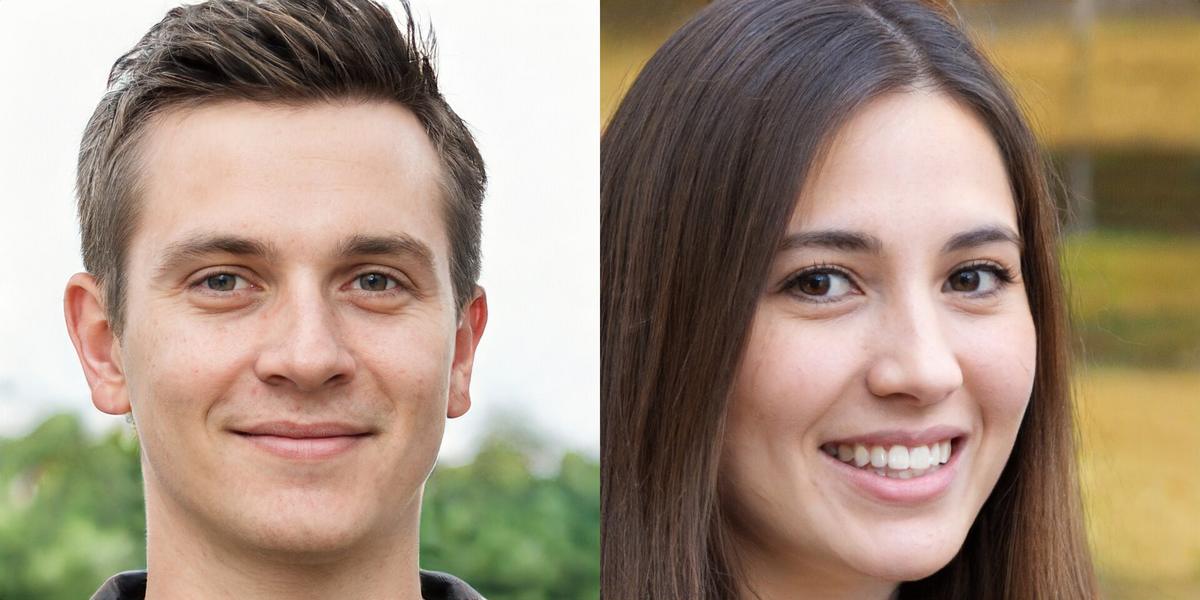

What AI Detectors Can Realistically Do
How Detectors Work
An AI detector is a statistical model trained to find patterns common in machine-made material but rare in human-made material. In controlled tests, these tools impress. Meta's Deepfake Detection Challenge, run across 2020, produced winners that could identify manipulated video with over 80% accuracy on the benchmark dataset. Academic benchmarks like FaceForensics++ and the DFDC dataset have shown similar numbers.
The Benchmark Gap
The real world is not a benchmark, and the gap matters. A 2024 review of detection methods found accuracy ranging from 65% to 92%, depending on the dataset and the generation method used to create the fakes. That range is the story. The same tool that catches a fake made by one model will miss a fake made by another. No tool tells you which situation you are in.
The False Positive Trap
The false positive rate is the bigger problem. Independent testing has repeatedly shown that AI detectors flag human-written text as machine-made at rates high enough to matter, especially for non-native English writers. A student who writes clearly and simply is more likely to be accused of cheating than a native speaker who uses complex sentence structures. The detector mistakes simplicity for machine output. The same problem applies to images. A detector that works on a high-resolution render may fail on a compressed version sent through WhatsApp, where the compression artifacts wipe out the subtle signals the detector relies on. So what can detection do? It can give you a probability, not a verdict. It can tell you that an image has a 75% chance of being synthetic. That is useful information. It is not proof. You cannot confront someone with a probability. You can only use it as a prompt to look harder, to apply the checking habits that work regardless of what the tool says. The tools are a starting point, not a destination. Any guide that tells you otherwise is selling you a false sense of security.
Verifying Synthetic Media in Singapore
The Legal Backstop
In Singapore, the question of checking synthetic media carries a specific set of local pressures. The legal landscape is unusually well-defined. The Protection from Online Falsehoods and Manipulation Act, known as POFMA, applies to machine-made falsehoods in the same way it applies to any other false statement of fact. There is no separate deepfake-specific amendment to POFMA as of the 2026 date we are writing toward. The law is written broadly enough to cover synthetic media without needing to name it. A deepfake that makes a false statement of fact about a person or institution can be subject to a correction direction, requiring the poster to publish a correction alongside the original material. The same applies to the Online Criminal Harms Act, or OCHA, which gives police the power to direct platforms to disable access to material used for criminal activities, including AI-generated scam material. The first reported prosecution under OCHA for AI-generated scam material came in June 2025. The case involved exactly what you would expect: a fake video call impersonating an official.
Election Rules
The Parliamentary Elections (Amendment) Act 2024 goes further during election periods, banning digitally generated material that realistically depicts a candidate saying or doing something they did not say or do. The Returning Officer can issue corrective directions to remove such material, and social media platforms must comply within specified timeframes.
Your Real First Line of Defense
Here is the catch: the law is a backstop, not a first line of defense. A POFMA correction direction is not a fact-check article. It is a legal mechanism that compels a response, not a check on the underlying claim. The actual work of checking whether something is true falls to you. The local infrastructure exists to help. Factually, the government's fact-checking portal, publishes clarifications on false claims circulating locally. Black Dot Research, an independent fact-checking organisation founded in 2023, covers Singapore and Asia, including claims involving synthetic material. The mainstream media is involved too; CNA's "Truth and Lies" segment has been active since 2023. The National Library Board runs the S.U.R.E. programme, Source, Understand, Research, Evaluate, which has added synthetic-media checking to its curriculum for schools and public workshops. The Ministry of Education has included synthetic-media awareness in its Cyber Wellness curriculum since 2024. None of these resources will do the checking for you. They are the scaffolding for a skill you must build. The habit of lateral reading, opening new tabs to check the source and the claims before you believe or share, is the durable behaviour. It works in Singapore exactly as it works anywhere else.
Deepfake Detection Limits 2025
Be precise about the limits. Vague warnings help no one.
A Moving Target
The first limit is that detection accuracy is a moving target. The 2024-2025 research shows a range of 65% to 92% accuracy across different models and datasets. That range is not improving in a straight line. As generation methods get better, detection gets harder. The benchmarks that once measured progress now show it plateauing.
Trained on Yesterday's Fakes
The second limit is that detection tools are often trained on synthetic data. They are good at recognizing the patterns of the models they were built with, but they miss a new model that produces different statistical signatures. A detector that works on DALL-E 3 images may fail on a Midjourney v6 output. Neither may catch what Sora produces.
The Adversarial Squeeze
The third limit is the adversarial one. It is trivially easy to add noise to an image, compress it, or re-render it in a way that breaks a detector while leaving the visual content essentially unchanged. A cheapfake, which is media altered with simple tools like slowing down video or cropping out context, is often indistinguishable from a genuine artifact and is not a deepfake at all. It still deceives.
Metadata Is Fragile
The fourth limit is the false positive problem, which we have already covered. It is the reason you cannot simply trust a detector's verdict. The fifth limit is the metadata problem. C2PA content credentials, the provenance standard adopted by Adobe, Microsoft, Open AI, Google, Meta, and the BBC, embed a digital watermark into synthetic material. That watermark can be stripped. A screenshot of an AI-generated image loses the metadata. A re-encoded video loses it too. Open AI began implementing C2PA in DALL-E 3 images in February 2024. Google Deep Mind's Synth ID, released in beta in August 2023 and expanded to video and text in 2024, uses a different approach, embedding an imperceptible watermark that survives some transformations but not all. None of this is to say that detection is useless. Detection is a probabilistic signal, not a definitive verdict. Use it as one input among many. Never use it as the sole basis for a conclusion. The image you are looking at may be a deepfake. It may be a real photo that a detection tool flagged by mistake. The only way to know is to verify by other means: reverse image search to see where the image has appeared before, lateral reading to check the source and the claims, and a healthy scepticism of what your eyes tell you. AI generation can now produce photorealistic synthetic media that your eyes cannot distinguish from reality.
Synthetic Media Literacy Guide
Media literacy is the ability to judge whether a claim, image, video, or message is true, not whether it feels true. The feeling of truth is exactly what generative AI is designed to produce. A deepfake video of a public figure speaking words they never spoke feels real because it looks and sounds like them. A photorealistic image of a disaster that never happened feels real because it matches the visual grammar of news photography. An AI voice clone of your child calling you in distress feels real because it is their voice. The feeling is the trap.
Lateral Reading
The way out is to build a habit of checking that does not depend on your instincts. The most important habit is lateral reading. When you encounter a piece of material that matters, open a new tab and check the source. Who published it? What is their track record? Is this the first time they have claimed this, or is there independent confirmation? Do not stay on the original page. The original page is designed to make you believe.
Reverse Image Search
The second habit is reverse image search. If an image is being shared as evidence of something, find out where it has appeared before. A photo that has circulated for years can be recycled to support a new claim. The reverse image search will expose that. The third habit is checking the source of the source. A claim that cites an anonymous account or an unverifiable document is weaker than one that cites a named source with a published methodology.
Guard Your Footprint
The fourth habit is being aware of your own digital footprint. When you upload a suspicious image to a public site for reverse image search, you are revealing your identity and your location to the operator of that site. A privacy-conscious reader might prefer to use a service that does not retain the image, or to crop out identifying details before uploading. The fifth habit is understanding the difference between a fact-check and a correction. A fact-check organisation like Black Dot Research or Factually publishes its methodology and its evidence. A POFMA correction is a legal directive, not a check. Both can tell you that a claim is false. Only the fact-check tells you why.
The S.U.R.E. Framework
The S.U.R.E. framework from the National Library Board, which stands for Source, Understand, Research, Evaluate, is a teachable sequence that works as well in a classroom as it does in a What sApp thread. It is embedded in Singapore's school curriculum and public libraries. It does not depend on any specific technology. The skills it teaches, questioning the source, checking the evidence, looking for alternative explanations, are durable in a way that no detection tool is. The tools change. The liar's playbook does not.
AI Voice Cloning Image Video Verification
The most dangerous deepfakes are not the ones that look real. They are the ones that sound real.
The Voice Scam
AI voice cloning has advanced to the point where a few seconds of audio are enough to create a convincing clone of a specific person's voice. Scammers in Singapore have used this to run kidnapping scams. A victim receives a call from a panicked family member's cloned voice, demanding money for release. The Singapore Police Force has issued multiple advisories about this. The most recent advisory on AI voice cloning scams came in March 2025. The psychology of the scam is brutal. The voice is the first thing you trust, the earliest memory you have of a person. The call bypasses your rational mind and goes straight to your emotional core.
The Protocol
The protection is not detection. You cannot listen to a voice and reliably tell whether it is synthetic. The synthetic versions are too good. The protection is protocol. If you receive a call from a family member in distress demanding money, hang up. Call them back on a number you know is theirs, not the number that called you. Ask a question that only the real person would know the answer to, something that would not be on a social media profile. Do not send money. Do not buy gift cards. Do not transfer cryptocurrency.
Video Calls
The same principle applies to video calls. A deepfake video call can show a person's face and use their voice. The face is not the person. If you are in a video call with someone who asks for money or sensitive information, verify by another channel. Call their office. Send a text message to a number you know is theirs. Ask a question that a stranger could not answer. The check is not about whether the video is a deepfake. It is about whether you are actually talking to the person you think you are. The tools that exist for this are clunky and not widely used. The habit is free and always works.
Verifying Images
For images, the same principle applies. An AI-generated image can be photorealistic. It cannot be verified by looking at it. You have to check where it came from. A reverse image search will show you if the image has appeared before in a different context. A search for the person in the image will show you if they have a digital footprint that matches. If the image is of a person who does not have a digital footprint, that is a red flag. Real people have one. The question to ask is not "is this image real?" but "does this image have a verifiable provenance?" The answer to the second question is something you can check. The answer to the first is not.
How to Check If an Image Is AI-Generated
You see an image that looks like a news photo, but something feels off. The lighting is perfect, the details are too crisp, the faces are slightly wrong. Your instinct says "deepfake." Your instinct is not a verification tool. Here is what to do.
First, do not rely on visual inspection. The image may be photorealistic. The tells that existed in Midjourney v5, the extra fingers, the garbled text, the waxy skin, are largely fixed in newer models. A 2025 model can generate an image of a hand that is anatomically correct. The text in the background is now rendered with few errors. Second, run a reverse image search. Use Google Images, Tin Eye, or Yandex. If the image has appeared before in a different context, the search will show you where. If it has appeared before with a different caption, you have your answer. Third, check the metadata. If the image has C2PA content credentials, the provenance will be embedded. Remember that the metadata can be stripped. The absence of metadata proves nothing. Fourth, look for the source. Who published the image? Is it on a reputable news site with a photo credit, or is it on a random account with no verification? A real news photo has a chain of custody. An AI-generated image does not. Fifth, use an AI detection tool like Hive Moderation or Sensity AI. Treat the result as one input among many, not as a verdict. A tool that says "92% AI-generated" is not saying "this is a deepfake." It is saying there is an 8% chance this is a real image that the tool has misclassified. The false positive rate for these tools is real. It is higher for images that have been compressed, cropped, or edited in any way.
The habit to build is not "spot the fake." It is "verify the real." When you see an image that matters, your job is not to decide if it is synthetic. Your job is to find out if it is true. The image is the starting point, not the ending point.
What Content Credentials Can and Cannot Do
C2PA, the Coalition for Content Provenance and Authenticity, released version 2.1 of its standard in June 2024. The idea is simple: attach a digital watermark to synthetic material so that it can be identified. Adobe calls this Content Credentials, and it is built into Photoshop and other tools. Microsoft, Open AI, Google, Meta, and the BBC are all adopters. Open AI has been adding C2PA to DALL-E 3 images since February 2024. Google Deep Mind's Synth ID embeds an imperceptible watermark into synthetic material, and it was expanded to video and text in 2024. The promise is that you can check whether an image or video was made by an AI.
Why Watermarks Fail
The reality is more complicated. The watermark can be stripped. A screenshot of an AI-generated image may lose the metadata. A re-encoded video will definitely lose it. If a deepfake is designed to deceive, the first thing the creator will do is strip the credentials. C2PA works for labeling material that is published as AI-generated. It does not work for catching material that is designed to appear authentic.
The Adoption Gap
The other problem is adoption. The standard only works if the tools people use to create and share material support it. A deepfake created with an open-source model that does not embed credentials will not have a watermark. There is no way to tell the difference between a synthetic image without a watermark and a real image without a watermark. The final problem is that credentials are not a detection tool. They are a labeling tool. They tell you where a piece of material came from, not whether it is true. A news photo taken by a human photographer and an AI-generated image can both have C2PA credentials. The credentials just show the chain of custody.
For a reader, the practical takeaway is this: content credentials are a useful signal. They are not a substitute for the checking habits described in this guide. Use them when you can. Do not rely on them. The image that has no credentials is not necessarily fake. The image that has credentials is not necessarily real. The only way to know is to check.
Frequently Asked Questions
Can I trust my eyes anymore?
No. AI-generated images and videos have reached the point where they can be photorealistic. The human eye cannot reliably distinguish between a real image and a synthetic one. This is not a personal failing. It is a limit of human perception. The way to compensate is not to try harder to see the fake, but to verify the real. Use reverse image search, check the source, and apply lateral reading. Your eyes are the starting point, not the ending point.
Are AI detectors reliable?
No. Detection tools have a false positive rate high enough to falsely flag human-written text as machine-made, especially for non-native English writers. The accuracy of image and video detectors ranges from 65% to 92% depending on the dataset and the generation method. A detector can give you a probability, not a verdict. Treat any single tool's output as one input among many, not as proof.
What is a cheapfake?
A cheapfake is media altered with simple tools that do not require AI. Slowing down a video, cropping out context, or mislabeling an old photo are all cheapfakes. They are harder to spot than deepfakes because they use real footage. The deception is in the editing and the context, not in the pixels. The checking habits are the same: check where the media originally came from.
Is POFMA a fact-checking tool?
No. POFMA, the Protection from Online Falsehoods and Manipulation Act, is a legal mechanism that can compel correction or removal of false statements of fact. A POFMA correction direction is not a fact-check article. The Ministry of Digital Development and Information (MDDI) oversees the POFMA Office, and the law includes a right of appeal to the High Court. Fact-checking organisations like Black Dot Research and Factually publish their methodology and evidence, which is different from a legal directive.
What is the single most important habit to build?
Lateral reading. Open new tabs and check the source and the claims before you believe or share. This works regardless of whether the material is a deepfake, a cheapfake, a rumor, or a genuine oversight. It does not depend on any specific technology. It is the one habit that will never become obsolete.
The Economics of the Arms Race
Why is it so hard to build a reliable detector? The answer is money. Generative AI companies make money by selling tools that create material. Every improvement in realism makes those tools more valuable. Every improvement in realism also makes the fake harder to spot. A detector that works today will not work tomorrow. The generation models are trained on larger and more diverse datasets. The gap between generation and detection is not closing. The 2024-2025 research shows a plateau in detection accuracy, not an improvement.
The reason is structural. A detection model is trained on a specific set of examples. A generation model can be trained to avoid the patterns that the detector uses. This is an adversarial relationship. The generation side has the advantage. It is easier to generate a fake that fools a detector than it is to build a detector that catches all fakes. The cost structure tells the story. A generation model can be trained on a cluster of GPUs. Once trained, it can produce an unlimited number of fakes at almost zero marginal cost. A detection model must be trained on a dataset of both real and fake examples. The dataset must be continuously updated as new generation models are released. The detection side is always one step behind. The gap is growing. This is not a technical problem that someone will solve with a better algorithm. It is an economic problem. The incentives are aligned against detection.
So what does this mean for you? The only durable defense is the habit of checking. A tool can be defeated. A habit cannot. The habit of asking "who is the source?" and "what is the evidence?" and "what would it take for me to believe this?" is the same habit that guides a traveler through a foreign city, a reader through a news story, and a citizen through an election. It is not a new skill. It is a skill that the age of AI has made essential.
Practical Steps for the Time-Pressed Reader
You do not need to become an expert in deepfakes to protect yourself. You need to know the three situations that actually matter.
The first is a voice call from someone who sounds like a family member in distress. Hang up. Call them back on a number you know is theirs. Ask a question that only the real person would know. Do not send money.
The second is an image or video that claims to show something important. Do a reverse image search. Check if the image has appeared before in a different context. Look at the source. Is it a reputable news outlet or an anonymous account? If you are still unsure, do not share it. Sharing an unverified claim makes you part of the problem.
The third is a message that asks you to act quickly, especially if it involves money, gift cards, or cryptocurrency. Scammers create urgency to bypass your critical thinking. They want you to act before you have time to check. The best response is to do nothing immediately. Wait. Verify. Then decide. The Scam Shield app, launched as the Scam Shield Suite in September 2024, can help block scam messages. It is not a substitute for your own judgment. The same goes for the tools that claim to detect synthetic material: they are a starting point, not a solution. The habits of checking are the only thing that will never be fooled.
Where to Start
If you are worried about a specific piece of material, start with the section on how to check if an image is AI-generated. Apply its steps to your situation. If you want to protect yourself from voice cloning scams, start with the section on AI voice cloning and video verification. If you want to understand the legal landscape in Singapore, start with the section on verifying synthetic media in Singapore. If you want to build a general skill, start with the section on synthetic media literacy. Practice lateral reading on the next piece of material you are tempted to share.
This subject suits the reader who is willing to slow down and verify. It does not suit the reader who believes that a single tool or a single glance at an image is enough. This is a destination for the traveler who wants to see a place, not just check it off a list. It is for the reader who is curious about how things work, who is willing to do the work of checking, and who understands that the world is full of people who want to deceive them. It is not for the reader who wants a simple answer. There is not one. The tools will change. The models will improve. The fakes will get harder to spot. The habits of checking will not. Start with the one question that matters: "How do I know this is true?"
Meta
The 2024-2025 research shows that deepfake detection accuracy has plateaued at 65% to 92%, and the gap is growing because generation models are trained on larger datasets while detection models are trained on the same data, creating an adversarial cycle that detection cannot win.
More in AI-generated content and deepfakes
-
 AI chatbots and hallucinations: fact-checking AI answers
-
 AI voice cloning scams: how they work and how to protect your family
How AI voice cloning scams use short voice samples to impersonate family members, and how a family safe word provides a low-tech defence against this fraud.
AI voice cloning scams: how they work and how to protect your family
How AI voice cloning scams use short voice samples to impersonate family members, and how a family safe word provides a low-tech defence against this fraud.
-
 AI-generated news sites and content farms
-
 Content credentials (C2PA) and watermarks explained
What C2PA content credentials and watermarks actually prove about a file's origin, their structural limits, and why they do not replace source verification.
Content credentials (C2PA) and watermarks explained
What C2PA content credentials and watermarks actually prove about a file's origin, their structural limits, and why they do not replace source verification.
-
 Deepfake scams using celebrities and politicians
Learn to spot deepfake videos of celebrities and politicians pushing investment scams in Singapore, and what to do when you see one.
Deepfake scams using celebrities and politicians
Learn to spot deepfake videos of celebrities and politicians pushing investment scams in Singapore, and what to do when you see one.
-
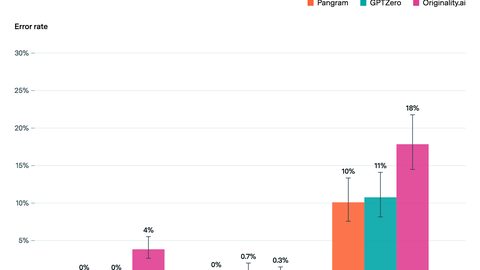 Do AI detectors work?
An honest assessment of AI detector accuracy, explaining why high false positive rates—especially for non-native English writers—make them unreliable as sole evidence.
Do AI detectors work?
An honest assessment of AI detector accuracy, explaining why high false positive rates—especially for non-native English writers—make them unreliable as sole evidence.
-
 How to spot a deepfake video
Learn the visual artefacts that can reveal a deepfake video—lip-sync errors, lighting mismatches, skin texture—and why these tells are disappearing as AI models improve.
How to spot a deepfake video
Learn the visual artefacts that can reveal a deepfake video—lip-sync errors, lighting mismatches, skin texture—and why these tells are disappearing as AI models improve.
-
 How to tell if an image is AI-generated
Learn to spot AI-generated images by checking hands, text, reflections, and metadata—with honest limits on each method as generative models improve.
How to tell if an image is AI-generated
Learn to spot AI-generated images by checking hands, text, reflections, and metadata—with honest limits on each method as generative models improve.
-
 Non-consensual deepfake images: what to do and where to get help
-
 Teaching students about generative AI and truth
Read next
-
AI chatbots and hallucinations: fact-checking AI answers
-
Deepfake scams using celebrities and politicians
Learn to spot deepfake videos of celebrities and politicians pushing investment scams in Singapore, and what to do when you see one.
-
Content credentials (C2PA) and watermarks explained
What C2PA content credentials and watermarks actually prove about a file's origin, their structural limits, and why they do not replace source verification.
-
Do AI detectors work?
An honest assessment of AI detector accuracy, explaining why high false positive rates—especially for non-native English writers—make them unreliable as sole evidence.
-
AI-generated news sites and content farms
-
How to spot a deepfake video
Learn the visual artefacts that can reveal a deepfake video—lip-sync errors, lighting mismatches, skin texture—and why these tells are disappearing as AI models improve.