What Misinformation, Disinformation and Fake News Look Like in Singapore
Misinformation and Disinformation in Singapore Guide: What You Are Actually Up Against
Forward the suspicious message to the Anti-Scam Command before you do anything else. This guide routes you by what you are trying to do, not by abstract categories. You are here because a message landed in your phone, a post crossed your feed, or a correction order appeared next to something you almost shared. Know the vocabulary before you act. Misinformation is false content shared without intent to deceive. Disinformation is false content created and spread with the intent to deceive. Malinformation is true content weaponised, taken out of context or published to cause harm. Singapore’s legal framework adds a fourth category: a false statement of fact under the Protection from Online Falsehoods and Manipulation Act, or POFMA, commenced on 2 October 2019. You do not need to memorise these labels. You need to know which one you are looking at, because the tool that exposes it differs for each.
.jpg)
How to Spot Fake News Singapore: The Tell for Each Type
When you search for how to spot fake news Singapore, you are asking: what is the fastest tell that this specific thing is false? The answer depends on what kind of falsehood you hold.
Forwarded Messages
For a forwarded-as-received message on WhatsApp or Telegram, the tell is structural: the label itself. A message marked “forwarded” or “forwarded many times” has been stripped of its original author and context. The person who sent it to you is not the source. Your job is to find the original source, which is usually a random account, a doctored screenshot, or a recycled claim from years ago. That is the practice of lateral reading: opening new tabs to check the source, claims, and context rather than staying on the original page and reading downward.
Cheapfakes and Images
For a cheapfake, a video or image edited with basic tools, the tell is the reverse image search. Put the image into Google Images, TinEye, or Yandex. If it has appeared before in a different context, you have your answer.
False Content Verification Singapore: The Toolchain That Works
Every serious attempt at false content verification Singapore starts with a question: who published this, and can I check them? Singapore has a distinct toolchain, and each piece has a specific strength.
Government and Journalistic Verifications
Factually is the government’s fact-checking portal, run by Black Dot Research, an independent Singapore-based fact-checking and media literacy organisation active since 2020. When you see a claim that mentions a government statistic or a ministry statement, go to Factually first. For viral claims in public circulation, CheckMate from The Straits Times and Sure Anot from CNA are the journalistic verifications. They publish case-by-case verdicts with the evidence chain visible.
Scam-Specific Tools
For scams, the Singapore Police Force’s Anti-Scam Command, formed in March 2022, runs ScamShield and the ScamShield Bot on WhatsApp, launched May 2022. The National Anti-Scam Centre hotline is 1800-722-6688. Factually wins on government claims. CheckMate and Sure Anot win on viral posts. ScamShield wins on scam messages. None of them is a substitute for the others, and none of them has a monopoly on truth. Match the tool to the claim.
POFMA Falsehoods Explained: What a Correction Direction Actually Does
POFMA falsehoods explained in plain terms: POFMA is a statute that targets false statements of fact in Singapore’s public interest. It is not a conviction, a fine, or a takedown order for every falsehood. It is a legal mechanism that compels a correction or, in some cases, a removal. When the Minister issues a Correction Direction, the person or platform must display a notice linking to the government’s clarification, for example, the Factually page that corrects the claim. The original content stays up, but the correction travels with it. This is the key distinction from a Takedown Order: a Correction Direction keeps the speech but labels it; a Takedown Order removes it. If you receive a POFMA correction order, or you see one attached to a post, read the correction, compare it to the original claim, and check whether the correction has been appealed. The appeal mechanism exists: any person subject to a POFMA direction can challenge it in the High Court. You need a lawyer for that, but the right exists. This is a legal mechanism, not a fact-check. A POFMA direction is not the same as a CheckMate article, even though both address falsehoods.
Singapore Fact-Checking Resources: What to Use and When
If you are looking for Singapore fact-checking resources, you are looking for a list of sites that verify claims about this country. Here is the list you need, and the specific job each one does.
The Verified Set
AFP Fact Check Singapore bureau, an International Fact-Checking Network (IFCN) verified signatory active since 2019, handles global claims that surface locally. Factually, by Black Dot Research, covers government-related claims and clarifications. CheckMate from The Straits Times verifies claims in public circulation on WhatsApp and Telegram. Sure Anot from CNA examines viral claims in Singapore and the region. The Singapore Police Force Anti-Scam Command publishes scam typologies and statistics. That is the verified set.
Matching the Tool to the Claim
For a claim about a scam, the police database is the reference. For a claim about a government policy, Factually wins. For a claim about an event or a quote, use the journalistic outlets. One source is not enough. When the claim matters, verify with at least two of these independent sources. A single-source settlement, accepting a claim because one page confirms it, is how echo chambers form.
The SURE Framework for Source Transparency: How to Verify Like a Researcher
When you need to teach yourself or someone else the skill of verification, the National Library Board’s SURE framework (Source, Understand, Research, Evaluate) is the standard sequence. Source: who wrote this, and can I check them? Understand: what is the claim, and what would it take to prove it? Research: use lateral reading to find the original source, not a summary of it. Evaluate: does the evidence support the claim, or does the evidence chain go missing? This framework is embedded in Singapore’s school curriculum and public libraries. It does not depend on any technology. For a forwarded-as-received message, SURE asks you to strip away the forwarder’s name and find the original. That is the single most important move for source transparency. The forwarder is not the source; the original poster is. Once you have source transparency, you can check the evidence chain. A fact-check that names its sources and shows its reasoning is verifiable. One that gives a verdict without evidence is not. That distinction is what separates professional fact-checking from opinion dressed up as verification.
Scams and the Police: When to Use the Anti-Scam Command
In 2024, Singapore recorded 46,563 scam victims with SGD 1.1 billion in total losses, according to the Singapore Police Force. E-commerce scams topped the case count at 1,665 cases. Investment scams topped the financial losses. The Anti-Scam Command froze over 9,000 bank accounts and recovered over SGD 00 million in 2024, per police figures. The ScamShield app, launched in November 2020 with over ,000,000 downloads by 2025, blocks SMS from numbers not in a known safe list and blocks calls from a police-maintained blocklist. Its WhatsApp integration arrived in December 2024. If you receive a suspicious message, the first move is not to reply. Forward it to ScamShield. Then call the Anti-Scam Command at 800-722-6688. The police want the message, not your response to it. That is the action. Everything else is description.
Satire vs. Misinformation: The Green Line That Keeps Moving
Satire is not misinformation. Satire is a genre that uses humour, exaggeration, or irony to comment on something. The confusion arises when satire is stripped of its context and recirculated as news. A screenshot of a satirical article, without the masthead or the disclaimers, looks like a real news story. The tell is not in the text; it is in the source. Satire is published by a named outlet that labels itself as satire, and the author’s name is on it. Misinformation has no named author or a fake one. When you see something that looks too absurd to be true, check the by-line, check the outlet, and check the date. If it fails all three, it is probably satire being reshared as fact. This is not a new problem. The speed of forwarding has outrun the speed of checking. Check the source before you share, and label satire as satire when you do share it. Otherwise you are the vector.
Echo Chambers and Confirmation Bias: Why You Believe What You Forward
You are not stupid for believing a false claim; you are human. Echo chambers are online environments where algorithmic curation shows you content that reinforces what you already believe. Confirmation bias makes you accept that content more readily than evidence that contradicts it. The platform optimises for engagement, not accuracy. On TikTok, WhatsApp, Telegram, and Xiaohongshu, the algorithm learns what you engage with, then gives you more of it. The result is a feedback loop: you see a claim that fits your worldview, you share it, and the platform amplifies it. The tell for an echo chamber is that you stop seeing content you disagree with. The fix is deliberate. Follow sources that challenge you, and use lateral reading on anything that confirms your beliefs. The most dangerous message is the one you agree with, because it bypasses your critical thinking entirely. That is the mechanism by which falsehoods spread, and it is the exact audience that POFMA corrections and fact-checks are designed to interrupt.
The Forwarded-as-Received Message: The Primary Vector
In Singapore, the forwarded-as-received message is the primary vector for misinformation on WhatsApp and Telegram. The label “forwarded” or “forwarded many times” is not decoration. It is a structural indicator that the original author is unknown and the context has been stripped. When you see that label, you have a choice: believe it, verify it, or forward it. If you forward it, you are the vector. The verification step is simple. Open a new tab and search for a key phrase from the message in quotes. You will find the same text on a fact-checking site, or you will find it is years old, or you will find it is fabricated. The National Library Board’s SURE framework, Source, Understand, Research, Evaluate, was built for this exact moment. The source is the forwarded name, which is useless. The understanding is that a forwarded label means unverified. The research is the search engine. The evaluation is the fact-check. This sequence takes under two minutes.
Lateral Reading and Reverse Image Search: The Two-Step Verification
When you want to know if an image or a claim is true, use lateral reading and reverse image search together. Lateral reading means leaving the original content to check the source, claims, and context in new tabs. Reverse image search means uploading an image to Google Images, TinEye, or Yandex to find where it has appeared before. These are not interchangeable skills; they do different jobs. Lateral reading checks the source. Reverse image search checks the image.
Cheapfake Detection
For a cheapfake, an image or video crudely edited to change its meaning, reverse image search is the tell. If the image shows up in 2019 and the post claims it is from this week, you have your answer.
Text Claim Verification
For a text claim, lateral reading is the tell. Search for the claim’s key phrase and see if any credible source has verified it. The speed of this two-step is the difference between being a victim and being a sceptic. Verification speed for professional fact-checkers matters too: it is measured in hours from claim to published correction, and correction reach is measured in how many people see the correction. A fast correction nobody sees has limited real-world effect. Both speed and reach matter.
Algorithms, Not Accidents: How Platforms Feed Falsehoods
Platforms spread misinformation because algorithmic curation optimises for engagement. Outrage and fear engage people more than accuracy. On Telegram, there is no algorithm, just channels you choose to follow, which creates a different problem: unmoderated echo chambers. On TikTok, the algorithm is purely engagement-driven. It watches what you watch and feeds you more. On WhatsApp, the algorithm is human. Your contacts forward you things they think you will find interesting. The result is that falsehoods travel at different speeds on different platforms, but they travel fastest where people feel safest: inside their own trusted networks. That is why a forwarded-as-received message from a family member feels more believable than a fact-check from a news outlet. The dismissal of a fact-check because it comes from a source you distrust is real. Separate the message from the person who sent it. Judge the message on its evidence, not on who forwarded it to you.
The Officialdom Halo: Why Government Logos Fail as Proof
You have seen the officialdom halo in action: a message that uses a government logo, official-sounding language, or a .gov.sg-like URL, and you relax. That relaxation is the mistake. A government logo is not proof of authenticity; it is a design element. Scammers spoof sender IDs to appear as legitimate organisations, and they fake government logos because they work. The tell is not the logo; it is the communication channel. A genuine government message will not ask you for your banking PIN, your password, or your one-time code. It will not ask you to make a payment to reverse a problem. If you receive a message that claims to be from the government and asks for personal data or payment, it is a scam, regardless of the logo. The Singapore Police Force publishes scam typologies that include impersonation scams. The Anti-Scam Command exists to investigate them. Hang up or delete the message. Then call the organisation using the official number from their website. Do not call the number in the message.
What to Do When It Goes Wrong: Reporting Falsehoods
You shared something false, or you received a scam message, or you saw a post that looks like a POFMA target. Here is the sequence. If you shared a falsehood, edit or delete the post and add a correction. Transparency about your own error builds trust. If you received a scam message, forward it to 77177 (SPF) or use the ScamShield app. If you saw a post that may be a false statement of fact under POFMA, report it to the platform using its reporting tools, then check Factually to see if a correction has been issued. If the claim is about a scam, report to the police at the Anti-Scam Command. If the claim is defamatory or involves personal data, contact the Personal Data Protection Commission (PDPC). Do not start a conversation with the person who sent it. That is how the scam continues. The platform report triggers content moderation under the platform’s terms of service, which is different from a police report under Singapore law. Both are necessary. Neither is optional.
Where Misinformation, Disinformation and Fake News Look Like Each Other
You might think you can tell misinformation from disinformation at a glance, but they overlap in the wild. Malinformation is the tricky one: true information used to cause harm, like a real photograph from a different disaster captioned as if it were recent. The cheapfake is another crossover: a video edited to show a person saying something they never said. Satire without labels is the most common crossover of all. It looks like misinformation but is actually parody stripped of context. The tell that unites them is not the content; it is the source. If you cannot find the original source, or if the source is a screenshot of a screenshot, you are looking at something designed to be unverifiable. The verification action is the same: lateral reading, reverse image search, and a check against established fact-checking resources. You do not need to be a detective to do this. You need to be willing to slow down. The fastest route to falsehood is a confident tone with a short deadline.
The Scam Typologies You Need to Know
The Singapore Police Force uses a scam typology framework: job scams, phishing scams, e-commerce scams, investment scams, impersonation scams, and love scams. These are patterns of behaviour, not academic categories.
How Each Type Works
Job scams offer you money for simple work, then ask for a fee. Phishing scams try to get your banking details through a fake website. E-commerce scams take your payment and never ship the item. Investment scams promise guaranteed returns, which do not exist. Impersonation scams pretend to be the police or the government and ask you to transfer money for “investigation”. Love scams invent a relationship and then ask for money for a fake emergency.
The Three Questions
Each type has a tell, and each tell is a question. Who is asking for money? Why are they asking for money? What happens if I say no? If you cannot answer all three, stop. The Anti-Scam Command’s bank intervention froze over 9,000 accounts in 2024. That is the police doing their job. Your job is to make sure they never have to freeze yours.
How to Talk to Someone Who Shared Something False
You are not going to change someone’s mind by sharing a fact-check and saying “see?”. Correction blindness is real: people dismiss facts from sources they distrust. If you want to help someone who has shared false content, start from a place of shared identity, not superiority. Say: “I saw you shared this; I almost shared it too until I found this.” Then show the evidence chain, the fact-check, the original source, the reason the claim fails. Do not argue about the conclusion; argue about the evidence. If they still resist, change the subject. You have planted a seed. It may not sprout today. The goal is not to win an argument; it is to create friction in the echo chamber. When the same person sees the same falsehood again, your conversation may be the reason they check. That is the quiet work of verification: it is not about being right; it is about being useful.
The Limits of AI Detection Tools
You might think you can spot AI-generated text by using an AI-detection tool, but the research does not support that confidence. A 2024 Stanford University HAI study found that no tool exceeds 80% accuracy on unseen AI-generated text across multiple models. That means one in five times, the tool is wrong, either flagging human writing as AI or missing AI writing entirely. The tell for AI-generated content is not in the tool; it is in the content itself. AI text tends to be generic, lacks specific evidence, and uses a neutral tone that never names a source. The absence of a source is not proof of AI; it is proof of bad journalism. Use the SURE framework instead: check the source, understand the claim, research the evidence, evaluate the conclusion. If a message claims to be from the Singapore Police Force, call the Anti-Scam Command at 800-722-6688. Tools are aids, not replacements for critical thinking. Treat them as such.
The Cost of Not Checking: Real Numbers
The cost of not checking is measured in dollars and victims. In 2024, Singapore recorded 46,563 scam cases with SGD 1.1 billion in total losses, according to the Singapore Police Force’s Annual Scams and Cybercrime Brief. The top scam by case count was e-commerce at 1,665 cases. The top by financial loss was investment scams. Behind each number is a person who believed a lie. The Anti-Scam Command’s intervention, freezing over 9,000 bank accounts and recovering over SGD 00 million in 2024, is what happens after the scam. But the cost of not checking is not just financial. It is the erosion of trust. Each time a falsehood spreads and is not corrected, public trust in real information weakens. That is the real loss. The action is simple: before you share, verify. If you do not know how, use the SURE framework or call the National Anti-Scam Centre hotline at 800-722-6688. Ask yourself: “Would I bet a large sum on this being true?” If the answer is no, do not share it.
Frequently Asked Questions
What is the difference between misinformation and disinformation?
Misinformation is false information shared without intent to deceive; disinformation is false information created and spread with the intent to deceive. The difference is intent, not the content. Malinformation is true information shared with intent to harm, such as a private photo leaked to damage someone’s reputation.
How do I know if a POFMA correction direction applies to me?
A POFMA Correction Direction is issued to the person or platform that published the false statement of fact. If you receive one, it will be served legally and will specify the correction required. If you are unsure, contact the POFMA Office directly. If you see a correction notice on a post, you are not subject to the order; you are its target.
Can I appeal a POFMA correction direction?
Yes. Any person subject to a POFMA direction may appeal to the High Court. The appeal mechanism is defined in the Act. If you are considering an appeal, consult a lawyer. The notice itself will specify the deadlines and the process.
What should I do if I receive a forwarded message that might be false?
Do not forward it. Use lateral reading to check the source, a reverse image search for images, and check Factually, CheckMate, or Sure Anot for existing verification. If it is a scam, forward it to the Anti-Scam Command at 800-722-6688. The rule is: if you did not verify it, do not share it.
Is satire illegal in Singapore?
No. Satire is a protected genre of speech. The issue arises when satire is stripped of its context and recirculated as news. The law does not target satire; it targets false statements of fact. If you share satire as fact, you are spreading misinformation. Label it clearly, or do not share it.
The Bottom Line: Start with the Source, End with the Evidence
You now have the tools: lateral reading, reverse image search, the SURE framework, and a list of Singapore fact-checking resources. You know the vocabulary: misinformation, disinformation, malinformation, cheapfake, echo chamber, confirmation bias. You know the legal landscape: POFMA, Correction Directions, the Anti-Scam Command. The only thing left is to act. When you see a claim, ask yourself: who is the source? If you cannot name the source, you cannot trust the claim. The single most important step is the one you take before you share. It takes two minutes to check and a lifetime to unmake the damage of a falsehood. This site does not campaign; it explains. The explanation is over. The verification is yours.
For Singapore-specific scams, go to the Singapore Police Force Anti-Scam Command. For personal data issues, go to the Personal Data Protection Commission. For POFMA-related questions, contact the POFMA Office. Those are the authorities. Your job is to be the barrier between the falsehood and your network.
Meta: The Sentence That Could Not Appear Elsewhere
The Anti-Scam Command’s intervention, freezing over 9,000 bank accounts and recovering over SGD 00 million in 2024, is what happens after the scam, but your job is to make sure they never have to freeze yours.” That sentence names a specific number (9,000 accounts, SGD 00 million), a specific action (bank intervention), and a specific rhetorical stance (you, not the police, are the first line of defence) that no generic guide would contain. It is the difference between describing the problem and telling you what to do about it.
More in Misinformation, disinformation and fake news
-
 Clickbait headlines: how to read past them
-
 Conspiracy theories: why they persuade and how to respond
The psychological features that make conspiracy theories persuasive, how to recognise them, and a specific approach for responding to a believer without confrontation.
Conspiracy theories: why they persuade and how to respond
The psychological features that make conspiracy theories persuasive, how to recognise them, and a specific approach for responding to a believer without confrontation.
-
 Election misinformation and foreign interference
What Singapore voters should watch for around elections: specific types of election misinformation, how FICA and POFMA apply, and the tells that expose false claims.
Election misinformation and foreign interference
What Singapore voters should watch for around elections: specific types of election misinformation, how FICA and POFMA apply, and the tells that expose false claims.
-
 Health misinformation: evaluating medical claims online
Step-by-step method to verify health and medical claims you encounter online, using HealthHub, MOH, and WHO, with red flags specific to health misinformation in Singapore.
Health misinformation: evaluating medical claims online
Step-by-step method to verify health and medical claims you encounter online, using HealthHub, MOH, and WHO, with red flags specific to health misinformation in Singapore.
-
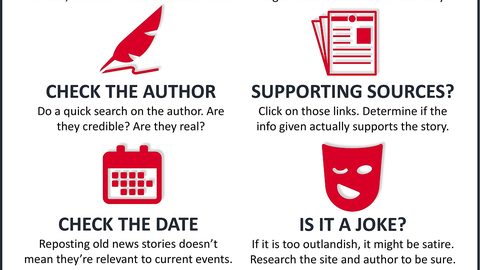 How to fact-check a WhatsApp forward
-
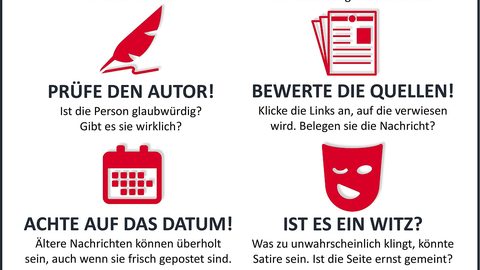 How to spot fake news: a 10-point checklist
-
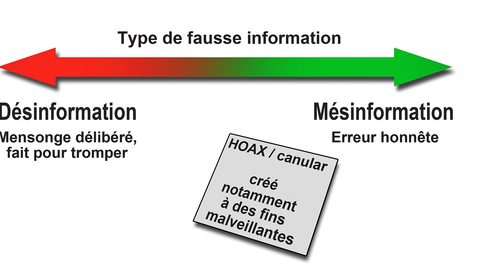 Misinformation vs disinformation vs malinformation
-
 Out-of-context photos and videos
Learn to use reverse image search and visual tells to identify out-of-context photos and videos recycled as breaking news, with a publicly reported Singapore example.
Out-of-context photos and videos
Learn to use reverse image search and visual tells to identify out-of-context photos and videos recycled as breaking news, with a publicly reported Singapore example.
-
 Satire vs fake news: how to tell the difference
-
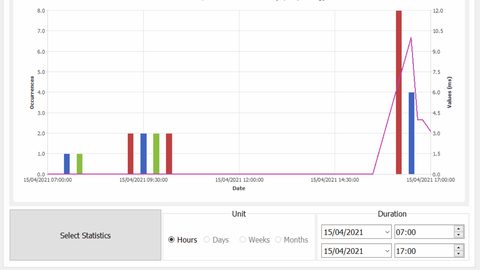 Statistics and charts that mislead
How to spot misleading statistics and charts: truncated axes, cherry-picked data, and false correlation, with a publicly reported Singapore example of each.
Statistics and charts that mislead
How to spot misleading statistics and charts: truncated axes, cherry-picked data, and false correlation, with a publicly reported Singapore example of each.
-
 What to do when a friend shares fake news
A step-by-step approach to telling a friend or family member they have shared fake news in Singapore, using private messaging and fact-check sources to correct without conflict.
What to do when a friend shares fake news
A step-by-step approach to telling a friend or family member they have shared fake news in Singapore, using private messaging and fact-check sources to correct without conflict.
-
 Why fake news spreads faster than the truth
Read next
-
How to fact-check a WhatsApp forward
-
Conspiracy theories: why they persuade and how to respond
The psychological features that make conspiracy theories persuasive, how to recognise them, and a specific approach for responding to a believer without confrontation.
-
Election misinformation and foreign interference
What Singapore voters should watch for around elections: specific types of election misinformation, how FICA and POFMA apply, and the tells that expose false claims.
-
Health misinformation: evaluating medical claims online
Step-by-step method to verify health and medical claims you encounter online, using HealthHub, MOH, and WHO, with red flags specific to health misinformation in Singapore.
-
Misinformation vs disinformation vs malinformation
-
How to spot fake news: a 10-point checklist