Scams and Online Fraud in Singapore: Recognition, Reporting, and Recovery
If a scam is happening right now, in this minute, act before you read anything else on this page. Call your bank's 24-hour fraud hotline. The number is on the back of your card, not in the message you just received. Tell them to freeze or reverse the transaction. Then call the Singapore Police Force at 1799. Then file a police report online at the i-Witness portal. Do not send more money. Do not call the number in the message. Do not reply to verify anything. The rest of this page maps the full landscape of online fraud in Singapore: how to recognise it, report it, and recover from what targets residents daily. It routes you to the right guide for the specific scam you face. The recovery steps for a spoofed SMS are not the recovery steps for a love scam.
Every other page on this site answers one question. This page does something different: it figures out which question you should be asking. If you have received an alarming forwarded message on WhatsApp and you want to know whether it is a scam or a falsehood before you act or share, head to the guide that explains how to verify information using lateral reading and reverse image search. If you already know you are facing a specific scam type, a government official impersonation scam, a job scam, a phishing SMS, go to the guide for that typology. If you have already lost money, go to the recovery guide that walks through bank disputes and police reports. If you are trying to protect a parent or a grandparent, go to the protection guide. Tell yourself which of those four is true, and follow the link that matches it. This hub exists so you never land on a page that answers the wrong question.


Scams Online Fraud Singapore Recognise Report Recover: The Full Landscape
Singapore's scam problem is not one problem. The Singapore Police Force's own typology framework divides it into six categories: job scams, phishing scams, e-commerce scams, investment scams, impersonation scams, and love scams. The Police's Annual Scams and Cybercrime Brief 2023 recorded 5,938 phishing cases and 1,004 government official impersonation cases for that year; the 2024 brief updates those numbers. Those figures are dated and sourced. The Police publish them annually. They matter because each category has a different pattern, a different victim profile, and different recovery steps. The man who transferred money to a 'boss' who messaged him on Telegram is a victim of an impersonation scam, not a phishing scam. The way he reports it, and the way his bank treats it, differs from the woman who clicked a link in a spoofed SMS. The framework is how you sort the landscape. The statistics are how you know its size.
Singapore Scam Types 2025: What Is Circulating Now
Government Official Impersonation
The specific templates change daily, but the structure does not. The dominant pattern in recent years is the government official impersonation scam: a call or message that claims to be from the police, the Ministry of Health, or the Singapore Police Force, demanding that you verify your identity or face arrest. These work because of what this site calls the officialdom halo. The message carries a logo, a .gov.sg-like sender ID, and official-sounding language. The target does not check whether the channel is genuine.
E-Commerce and Job Scams
A second pattern is the e-commerce scam, where a seller on a marketplace platform takes payment and vanishes. The Police's E-Commerce Marketplace Transaction Safety Ratings, launched 2024-05-10, rate platforms on their anti-scam measures. Check them before buying. A third is the job scam, where a recruiter offers high pay for simple work and then demands payment for training or admin fees. For each type, the pattern to recognise is the same: urgency, secrecy, a demand for payment or personal data outside a verified channel, and a reluctance to let you check independently.
How to Report a Scam to Singapore Police: The Exact Steps
Reporting is not a single action, and the order matters. Your first report is to your bank. Speed is the only thing that might recover the money. The bank's fraud team can sometimes freeze the receiving account if you act within minutes. Your second report is to the Singapore Police Force, either online at the i-Witness portal or in person at any Neighbourhood Police Post. The Anti-Scam Command, operational since 2022-03-21, centralises the investigation and coordinates with banks. Your third report, if the scam involved a phone number or SMS, is to ScamShield. It logs the number to warn others. A police report is a legal document. You will need it for your bank's dispute process, for your insurance claim if you have one, and for any civil action. Do not let the police report wait until you have gathered evidence. The Police want the report immediately. They will ask for screenshots and transaction records afterwards.
ScamShield App Singapore Setup: What It Actually Blocks
ScamShield, developed by the Government Technology Agency and the Singapore Police Force and launched 2020-11-20, is the first line of defence for most residents. Setup takes under three minutes. Download it from the official app store. Grant it permission to read and filter SMS on Android. The SMS filtering is Android-only; iOS does not allow third-party apps to read messages. The app will block calls and messages that match its known-scam database. It lets you report suspicious numbers and SMS sender IDs with one tap. Report a scam number by forwarding the message to the ScamShield SMS shortcode, 70999.
What the App Misses
The tool is not perfect. It has a false negative rate because scammers rotate numbers. It cannot stop a call that comes from a number not yet flagged. It is a filter, not a force field. You still apply the recognition patterns from the rest of this site. You still verify before you act. The app's accuracy is a real limitation, but it is the best free filter Singapore has. The reporting feed is what keeps it current.
Scam Recovery Steps Singapore Bank: Getting Your Money Back
Recovery is not guaranteed. Anyone who tells you otherwise is lying to you. The first step is the bank call, and it is time-critical. The transaction must be reported before the money leaves the receiving account. In Singapore, that is usually minutes. The bank will place a hold and begin a dispute. Under the relevant banking rules, you may be liable for losses if you authorised the transfer, even if you were deceived, unless you can show the bank was negligent. The second step is the police report, which your bank will require to proceed. The third is the appeal. If the bank rejects your claim, escalate to the Financial Industry Disputes Resolution Centre, which mediates disputes up to a capped amount.
The Paper Trail Matters
The practical detail most guides omit is documentation. Screenshot the message. Note the date and time of the transfer. Save the transaction reference number. Do not delete anything. The recovery rate for authorised push payment scams, where the victim willingly transfers the money, is low. That is why this site's guides focus so heavily on prevention and on the recognition patterns that stop the transfer from happening at all.
Anti-Scam Resource Guide: Where the Police Publish Their Playbook
The Singapore Police Force and the Ministry of Education co-publish the Anti-Scam Resource Guide, a document written for schools and parents. It is the single most underused public document on this subject. It contains the six-scam typology, case studies, and a set of recognition checklists written in plain language, not police prose. Download it, print it, and put it on the refrigerator if you have an older relative in the house. The Police also publish the annual Scams and Cybercrime Brief, which is where the 2023 and 2024 figures come from, and the E-Commerce Marketplace Transaction Safety Ratings, which name the platforms that are doing enough and those that are not. These are the evidence base this site builds on. When you read a statistic on this site, it is either from one of these Police publications and dated, or it is clearly labelled as advertising. The Police also run the 24/7 helpline at 1799. It is not a reporting line but an advisory line: call it if you are unsure whether a message is a scam.
POFMA and the Legal Framework: What the Law Can and Cannot Do
The Protection from Online Falsehoods and Manipulation Act, in force since 2019-10-02, is not a scam law. It is a falsehood law. Understanding the difference matters. POFMA gives the government the power to issue a correction direction, not a takedown direction, to a person who has posted a false statement of fact that is against the public interest. The correction must be accompanied by a link to the government's response. The right of appeal to the High Court is the prescribed route if you believe the direction is wrong. The site explains the mechanism neutrally. A reader who wants to challenge a correction order needs to know the appeal mechanism exists. A reader who wants to understand why a WhatsApp message carries a government correction needs to know the same law. The distinction is between content moderation, which is governed by platform rules, and legal action, which is governed by Singapore law. The IMDA Online Safety Code, in force since 2023-07-18, applies to designated social media services including Facebook, Instagram, TikTok, X, and YouTube. It requires them to take down specified egregious content. That is a separate regime from POFMA.
The Verification Toolkit: How to Check a Claim Without Leaving the Page
You do not need a fact-checking subscription to verify most claims. The tools are free. The single most effective technique is lateral reading: open a new tab and search for the sender, the phone number, or the exact phrase in the message. Read what other sources say. A reverse image search, Google Images, TinEye, or Yandex, will tell you where a photograph has appeared before. That is how you catch a scammer reusing a stock image or an old photo to fake a live news report. The key is to check the original source, not the forwarded message. A forwarded-as-received label on WhatsApp is the platform's way of telling you the message is not from a direct contact. The same logic applies to the sender IDs on SMS. If a message claims verification by the Singapore Police Force, call the helpline at 1799 and ask. The Police will confirm or deny. The confirmation comes from a number you typed, not the one that texted you.
The Privacy Cost of Verification
Each verification step has a user burden: how many steps it takes, and whether the tool exposes your own data. A reverse image search uploads your image to a third-party server. That is a privacy consideration. A call to the helpline exposes nothing.
The Recognition Patterns: What Every Scam Shares
Strip away the specific names and the sender IDs. Every scam in Singapore follows one of a small number of structural patterns. The too-good-to-be-true heuristic catches investment scams offering guaranteed returns and e-commerce deals at impossible prices. The urgent-demand pattern catches government official impersonation scams, which insist you act now or face arrest. Arrest is a threat that creates an emotional override. It short-circuits your judgement. The secret pattern catches the love scam, where the relationship must be kept hidden from family. The verify-by-reply pattern catches phishing, where the scammer wants you to confirm your banking credentials. These patterns are durable. The specific wording changes daily. When you recognise the pattern, the specifics stop mattering. This is the skill the section on pattern recognition builds: not a database of current templates, which would be outdated tomorrow, but a set of structural tells that persist across tactics.
A Warning on Deepfake Detection
The deepfake detection tools referenced by the Singapore Police Force, AlchemiX and Reality Defender, are for forensic analysis by professionals. They are not for consumer use. Do not trust a free online AI-detection tool to tell you whether a video is real. The false positive rate is substantial.
The Human Factor: Why We Fall for It and How to Protect Others
The scammers are not targeting a lack of intelligence. They are targeting a lack of time and an excess of emotion. The fear that a loved one is in trouble, the hope of a windfall, the respect for an official title. These are the levers. They work on everyone. The most effective protection for a vulnerable person is not a lecture. It is a pre-agreed family code word. Agree that any message claiming to be from a family member asking for money must be verified by voice call to the actual number. For older adults, the single most protective habit is the pause. Any message that demands urgency and secrecy is a scam. Full stop. The elderly are overrepresented in government official impersonation cases precisely because they are more likely to trust a police officer and less likely to question the officialdom halo. If you are protecting a parent, set up ScamShield on their phone. Put the helpline 1799 on speed dial. Rehearse the hang-up-and-call-back-on-a-number-you-know script. The law enforcement and legal frameworks on this page, the Police's Anti-Scam Command, POFMA, the SMS sender ID registration regime, are the safety net. The person you love is the first line of defence.
When the Platform Is the Problem: Social Media, Scams, and the Law
Reporting a scam post to a platform is not the same as reporting it to the police. Confusing the two is a category error with real consequences. Platform reporting flags content for removal under the platform's terms of service. A police report initiates a legal process under Singapore law. The platform may remove the post. It will not arrest the scammer. It will not recover your money. The IMDA Online Safety Code, in force since 2023-07-18, obliges designated social media services, Facebook, HardwareZone, Instagram, TikTok, X, YouTube, to take down specified egregious content. The code is not a scam recovery mechanism. If you see a scam on TikTok, report it to the platform to protect other users. But also make a police report if you or someone you know lost money. The distinction matters for a second reason: your police report becomes part of the official statistics. Those statistics drive the Police's resource allocation. The platform report vanishes into a moderation queue. Also remember the permanence of digital footprints. A scammer's post may be removed, but the scammer's stored images and messages remain on your device. They are evidence. Do not delete your own copies.
The Data Privacy Connection: Your Data Is the Scammer's Tool
Scams are not random. They are enabled by the data you have already leaked. The Personal Data Protection Act obliges organisations to notify you of a data breach. The PDPC's enforcement decisions show organisations collecting, using, or disclosing personal data beyond what is necessary or without adequate consent. Every time you give your phone number to a contest, your name to a quiz, or your email to an online retailer, you widen the pool of data a scammer can use to make a phishing message look legitimate. The scammer who calls you by name and cites your recent purchase is not psychic. They bought your data. This is why privacy-preserving behaviour, a separate email for shopping, a fake birthday, not answering unknown numbers, is not paranoia. It is a scam-prevention measure. The SMS sender ID registration regime, mandatory for all organisations since 2024-01-31, means that a message from OCBC that is not in your phone's saved contacts is now more likely to be a spoofed SMS. Legitimate organisations cannot use alphanumeric sender IDs without registering. The trade-off between convenience and privacy is real. This site does not tell you what to choose. It tells you what is at stake.
The Limits of the Tools: What ScamShield Cannot Do
Every tool on this page has a boundary. Respecting the boundary is what makes the tool useful. ScamShield has a true positive rate for known scam numbers. It blocks calls and SMS that match its database. Its false negative rate is higher than advertised, because scammers rotate numbers faster than the database updates. The app cannot read your WhatsApp messages. It cannot flag a scam that arrives by direct message. The helpline at 1799 is a verification line, not a reporting line. It confirms whether a message is a known scam. It does not take your report. The E-Commerce Marketplace Transaction Safety Ratings are a snapshot in time, published 2024-05-10. A platform's rating can change. The update frequency of the Police's scam database is a real limitation. The annual brief is annual. The monthly figures the Police publish on their website are more current but less analysed. The user burden of verifying a claim is real. It takes three minutes to call 1799. Most people do not have three minutes when a message says URGENT. That is why the recognition patterns in the section above matter more than any single tool.
Frequently Asked Questions
What should I do first if I think I am being scammed right now?
Call your bank's fraud hotline immediately and ask them to freeze the transaction. Then call the helpline at 1799. Then make a police report online. Do not send more money, and do not call the number in the message.
Can I get my money back from a bank transfer scam?
Not guaranteed. You authorised the transfer, so the bank may refuse to reimburse you. You can escalate to the Financial Industry Disputes Resolution Centre if the bank rejects your claim, but recovery rates are low. Act fast and keep your paper trail.
Is ScamShield enough to protect me from all scams?
No. ScamShield blocks known scam numbers and SMS, but it cannot read WhatsApp messages, and scammers rotate numbers faster than the database updates. Use it as a filter, not a force field, and apply the recognition patterns from this site.
What is the difference between reporting a scam to a platform and to the police?
Platform reporting flags content for removal under the platform's terms of service. A police report initiates a legal process under Singapore law. You can and should do both, but only the police report can lead to an arrest or a recovery order.
Where to Start: Your One-Move Action Plan
If you take one thing from this entire page, take this: the next time you receive an alarming message, you do not reply. You do not forward. You do not delete it. You take a screenshot. You wait thirty seconds. You ask yourself one question: does this demand urgency, secrecy, or payment outside a channel I can verify? If the answer is yes, it is a scam. The only action is to report it to the Police and the bank. Start with the guide that matches your situation: the verification guide if you are checking a message, the recovery guide if you have lost money, the typology guide if you want to recognise patterns, or the protection guide if you are guarding someone who cannot guard themselves. Bookmark this page. You will need it again. The scams will keep coming. Now you know how to keep them from working.
The Singapore Police Force's own 2023 and 2024 annual briefs show that the single most underused public document on this subject is the Anti-Scam Resource Guide co-published with the Ministry of Education. Most residents have never heard of it. Print it and put it on the refrigerator.
More in Scams and online fraud in Singapore
-
 Common scams in Singapore right now
-
 Cybersecurity basics: passwords, 2FA and passkeys
How passwords, 2FA, and passkeys differ in security, why SMS 2FA is vulnerable to SIM swap scams in Singapore, and the steps to take after an account takeover.
Cybersecurity basics: passwords, 2FA and passkeys
How passwords, 2FA, and passkeys differ in security, why SMS 2FA is vulnerable to SIM swap scams in Singapore, and the steps to take after an account takeover.
-
 Government official impersonation scams
-
 How to use ScamShield and anti-scam tools
Learn how to set up and use the ScamShield app and other anti-scam tools in Singapore, including their specific limitations and how they differ from antivirus software.
How to use ScamShield and anti-scam tools
Learn how to set up and use the ScamShield app and other anti-scam tools in Singapore, including their specific limitations and how they differ from antivirus software.
-
 Investment and crypto scams
Learn the structural red flags of investment and crypto scams in Singapore, including guaranteed returns offers and deepfake endorsements, and the verification steps to take before committing funds.
Investment and crypto scams
Learn the structural red flags of investment and crypto scams in Singapore, including guaranteed returns offers and deepfake endorsements, and the verification steps to take before committing funds.
-
 Job scams on Telegram and WhatsApp
Learn the task scam playbook used in Telegram and WhatsApp job scams in Singapore, and the pattern recognition steps to verify an unsolicited job offer before engaging.
Job scams on Telegram and WhatsApp
Learn the task scam playbook used in Telegram and WhatsApp job scams in Singapore, and the pattern recognition steps to verify an unsolicited job offer before engaging.
-
 Love and romance scams
Learn the grooming stages of love and romance scams in Singapore, the warning signs at each stage, and how to verify a person's identity before sending money.
Love and romance scams
Learn the grooming stages of love and romance scams in Singapore, the warning signs at each stage, and how to verify a person's identity before sending money.
-
 Malware-laced APK scams
What to do immediately if you installed a malware-laced APK in Singapore, how sideloading bypasses security, and the official reporting channels to use.
Malware-laced APK scams
What to do immediately if you installed a malware-laced APK in Singapore, how sideloading bypasses security, and the official reporting channels to use.
-
 Online shopping scams on Carousell and marketplaces
Learn the verification steps and safe payment habits to avoid online shopping scams on Carousell and marketplaces in Singapore, including seller checks and image authentication.
Online shopping scams on Carousell and marketplaces
Learn the verification steps and safe payment habits to avoid online shopping scams on Carousell and marketplaces in Singapore, including seller checks and image authentication.
-
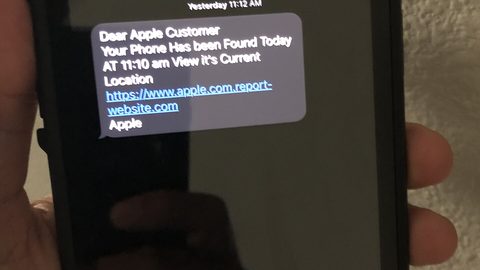 Phishing SMS and emails: how to spot them
Learn the step-by-step method to identify a phishing SMS or email in Singapore by inspecting the sender ID, checking links without clicking, and verifying claims through official channels.
Phishing SMS and emails: how to spot them
Learn the step-by-step method to identify a phishing SMS or email in Singapore by inspecting the sender ID, checking links without clicking, and verifying claims through official channels.
-
 Protecting elderly parents from scams
Learn conversation strategies and phone settings to protect elderly parents from scams in Singapore, including how to explain the officialdom halo and set up ScamShield.
Protecting elderly parents from scams
Learn conversation strategies and phone settings to protect elderly parents from scams in Singapore, including how to explain the officialdom halo and set up ScamShield.
-
 What to do if you've been scammed in Singapore
The ordered sequence of immediate steps to take after being scammed in Singapore: contact your bank, make a police report, and use ScamShield to report the scam.
What to do if you've been scammed in Singapore
The ordered sequence of immediate steps to take after being scammed in Singapore: contact your bank, make a police report, and use ScamShield to report the scam.
Read next
-
Job scams on Telegram and WhatsApp
Learn the task scam playbook used in Telegram and WhatsApp job scams in Singapore, and the pattern recognition steps to verify an unsolicited job offer before engaging.
-
Investment and crypto scams
Learn the structural red flags of investment and crypto scams in Singapore, including guaranteed returns offers and deepfake endorsements, and the verification steps to take before committing funds.
-
Common scams in Singapore right now
-
Love and romance scams
Learn the grooming stages of love and romance scams in Singapore, the warning signs at each stage, and how to verify a person's identity before sending money.
-
How to use ScamShield and anti-scam tools
Learn how to set up and use the ScamShield app and other anti-scam tools in Singapore, including their specific limitations and how they differ from antivirus software.
-
What to do if you've been scammed in Singapore
The ordered sequence of immediate steps to take after being scammed in Singapore: contact your bank, make a police report, and use ScamShield to report the scam.