Media Influence: Advertising, Influencers and Algorithmic Curation Explained
How Advertising, Influencers And Algorithms Decide What You See Next
Stop scrolling and look at your feed right now. That forwarded message in the family WhatsApp group, the TikTok video that appeared because you watched one cooking clip, the post from someone you follow that reads like a tip from a friend. Each arrived by a different route. All three were shaped by the same economic engine. Your feed is not a neutral window onto the world. It is a product designed by services whose revenue depends on keeping your eyes on the screen, and it is optimised by forces that pull in the same direction. This section maps those forces. Each guide beneath it trains you to spot a specific influence technique in something you will see this week. The question the section answers is how advertising, influencer marketing, and algorithmic curation work together to shape what a person in Singapore sees and believes online.


- Singapore Social Media Users: 5.13 million in 2025 (DataReportal, January 2025)
- Social Media Penetration: 85.7% of the total population (DataReportal, January 2025)
- Daily Social Media Usage: 2 hours 31 minutes average per user aged 16-64 (DataReportal, January 2025)
- Influencer Marketing Industry Value: SGD 105 million estimated in 2024, projected at SGD 125 million in 2025 (Influencer Marketing Hub)
- Online Advertising Spend: SGD 3.42 billion projected for 2025 (Statista)
- Top 2024 Scam Type: Job scams: 9,930 cases, SGD 152 million lost (SPF Annual Scams Brief 2025)
- Total Scam Losses 2024: SGD 1.11 billion across 51,501 cases (SPF Annual Scams Brief 2025)
The Three Forces That Shape Your Feed
Three distinct but overlapping forces determine what appears on your screen: algorithmic curation, advertising including sponsored posts and native advertising, and media bias. They are not separate problems. They are a system. The advertising-based business model of major social media services is the economic structure that drives all three. These services sell user attention to advertisers. To keep attention high, they use algorithmic curation that optimises for engagement. That rewards material which provokes emotion, reinforces existing beliefs, and keeps people scrolling. Advertisers buy that same attention to place sponsored posts that look like organic updates. Brands pay people with large followings to create native advertising that feels like a recommendation from a friend.
How Social Media Shapes Opinion In Singapore
Singapore's most-used service is WhatsApp, at 83.7% of internet users aged 16 to 64, followed by Facebook at 71.5%, Instagram at 63.1%, and TikTok at 57.8% (DataReportal, January 2025). Each curates differently, but all share the same goal: engagement optimisation. The algorithm does not care whether what it shows you is true. It cares whether you stop scrolling, comment, or share.
How Each Platform Delivers Influence
On WhatsApp, the primary vector for misinformation is the forwarded-as-received message. You can spot it by the label and the absence of an original source. On TikTok, the algorithm builds a personalised feed from your watch history. It creates a filter bubble that can narrow what you see within minutes. On Facebook and Instagram, the terms of service allow paid posts to appear alongside updates from friends. Telling the difference is hard. The result is an echo chamber that amplifies whatever your existing habits and beliefs point toward. Confirmation bias does the rest: you are more likely to believe and share information that confirms what you already think. The algorithm rewards you for it by showing you more of the same.
Sponsored Content And Influencer Disclosure Rules
Singapore's Advertising Standards Authority, under the Consumers Association of Singapore, enforces the Singapore Code of Advertising Practice. The latest edition, updated in 2019, requires clear and prominent disclosure of paid partnerships. Section 6.2 of SCAP states that sponsored material must be identifiable as advertising. The rule applies to anyone posting for payment, to brands, and to the services that carry the posts. A post that is paid for must say so in a way that a reasonable person would notice before they engage with it. In practice, this means hashtags like #ad or #sponsored placed at the top of a caption. Not buried at the end of a list of tags.
What The Industry Numbers Mean For You
The influencer marketing industry in Singapore was valued at an estimated SGD 105 million in 2024, with projections of SGD 125 million in 2025 (Influencer Marketing Hub). As the industry grows, so does the volume of posts that may or may not comply. The confusion pair to watch is the paid endorsement versus the organic recommendation. Someone who genuinely likes a product and someone who was paid to say they like it look identical on the screen. The difference is disclosure. Without it, you cannot tell whether the recommendation is authentic or bought. That is why disclosure rules exist, and why they matter for anyone trying to assess what they see online.
| Force | What It Does | Who Controls It | Singapore Regulation |
|---|---|---|---|
| Algorithmic Curation | Selects what to show each user, optimising for engagement | Platform (Facebook, TikTok, YouTube, Instagram) | IMDA Online Safety Code (2023) allows direction to remove egregious content |
| Advertising (Including Native) | Pays for placement of sponsored material that looks organic | Advertiser, brand, platform | SCAP requires clear disclosure of paid partnerships; enforced by ASAS |
| Media Bias (Framing, Loaded Language, Omission) | Shapes how information is presented to influence interpretation | Creator, news outlet, publisher | POFMA (2019) addresses false statements of fact; does not regulate editorial slant |
Algorithmic Curation And Engagement Optimisation
Algorithmic curation is the process by which services select what to show you. It is not random. It is not neutral. It is designed to maximise engagement: the time you spend on the service, the number of posts you interact with, the likelihood that you will return. Engagement optimisation means the algorithm learns what keeps you watching and shows you more of it.
How The Feedback Loop Traps You
Watch one video about a scam and the algorithm may assume you want more scam-related material, including false or alarmist claims. Engage with political posts and the algorithm will show you more political posts. It will tend to show you updates that align with what you have already agreed with. This creates an echo chamber: an online environment where you encounter only information that reinforces your existing views. It also creates a filter bubble: a personalised information ecosystem where material that challenges your views is algorithmically excluded. The economic structure driving this is the advertising-based business model. These services do not charge users money. They charge advertisers for access to user attention. The more time you spend there, the more ad inventory they can sell. The algorithm's job is to keep you there. Accuracy is not a metric. Engagement is.
Media Bias, Framing And Loaded Language
Media bias is not the same as misinformation. A story can be factually accurate and still be biased through the framing effect: the way a story is presented shapes how you interpret it. Loaded language, words chosen to provoke an emotional response rather than to inform, is one tool. Omission bias, leaving out context or alternative perspectives, is another. A news outlet that reports a crime statistic without noting the overall crime trend is using omission bias. A headline that uses the word "crackdown" instead of "enforcement" is using loaded language. These techniques are not illegal. They are not regulated by POFMA, which addresses false statements of fact, not editorial slant. But they shape what you believe, and they interact with algorithmic curation. An algorithm that rewards engagement will favour material that uses loaded language because it provokes a stronger reaction.
Use The S.U.R.E. Framework To Push Back
Your task is to recognise the technique and to practice lateral reading: leave the original post to check the source, claims, and context before believing or sharing. The S.U.R.E. framework, Source, Understand, Research, Evaluate, is embedded in Singapore's school curriculum and public libraries. It is a teachable verification sequence that works regardless of which service you use. Source: who created this and what is their track record? Understand: is the claim complete or is something missing? Research: what do other independent sources say? Evaluate: does the evidence support the conclusion?
Route Yourself By What You Need
Start with the question you need answered. If your feed keeps showing you certain products, certain political posts, certain types of material and you want to understand why, go to the guide on algorithmic curation. It answers: what determines what I see on my social media feed? If you want to spot when a post is actually an ad, go to the guide on sponsored posts and influencer disclosure. It answers: how can I tell if someone was paid to post this? If you want to read news across different outlets to see bias, go to the guide on media bias. It answers: how do I compare how different news sources cover the same story? Each guide is written for the specific question it answers. The depth belongs to those pages. This one owns the map.
The Legal Framework In Singapore: POFMA, PDPA And The Online Safety Code
Singapore's legal framework for online material sits alongside the three forces. It does not replace them. The Protection from Online Falsehoods and Manipulation Act, passed in 2019, addresses false statements of fact. It issues correction directions, which require a service or person to publish a correction, and takedown orders, which require removal. As of the end of 2024, 109 orders had been issued cumulatively: 83 correction directions and 26 takedown orders. POFMA is not fact-checking. Fact-checking is a journalistic practice that publishes a verdict with evidence. A POFMA direction is a legal order with penalties for non-compliance. The distinction matters because a reader who sees a POFMA correction may assume the claim was false, but the process is legal, not editorial.
Other Laws That Set The Boundaries
The Personal Data Protection Act governs how organisations collect, use, and disclose personal data. Its nine core obligations include consent, purpose limitation, and notification. The IMDA Online Safety Code, which took effect in July 2023, applies to designated services with significant reach or impact in Singapore: Facebook, Instagram, TikTok, X, YouTube, and HardwareZone as of 2024. It gives IMDA the power to direct services to remove egregious material or disable accounts that persistently post such material. These laws create the boundaries within which the three forces operate. They do not change the underlying economic structure. The advertising-based business model still drives algorithmic curation, sponsored posts, and the incentives that shape what you see.
A Caveat: This Map Is Not The Territory
The three forces described here, algorithmic curation, advertising, and media bias, are the major structures shaping what you see online. They are not the only ones. Terms of service change. New services emerge. The specific scam typologies and statistics published annually by the Singapore Police Force are updated every year, and the current numbers for 2024, 51,501 scam cases and SGD 1.11 billion in losses, will be superseded. The tools available today, such as ScamShield, are updated regularly. The visual tells for AI-generated material shift with every model update. The durable skills are the ones that do not depend on a specific tool: lateral reading, the S.U.R.E. framework, the habit of checking the source before sharing, and the recognition that the advertising-based business model is the economic engine behind all three forces. Those skills will serve you regardless of which service you use, which law is in force, or which scam variant appears in your inbox next week.
More in Advertising, influencers and algorithms
-
 Body image and social media filters
How beauty filters and editing tools on social media shape body image, with research-backed effects and practical critical-viewing habits for Singapore users.
Body image and social media filters
How beauty filters and editing tools on social media shape body image, with research-backed effects and practical critical-viewing habits for Singapore users.
-
 Dark patterns: design that manipulates you
How dark patterns like urgency timers and subscription traps manipulate choices online, with Singapore examples, visual tells, and PDPC enforcement context.
Dark patterns: design that manipulates you
How dark patterns like urgency timers and subscription traps manipulate choices online, with Singapore examples, visual tells, and PDPC enforcement context.
-
 Echo chambers and filter bubbles: are they real?
-
 How social media algorithms decide what you see
-
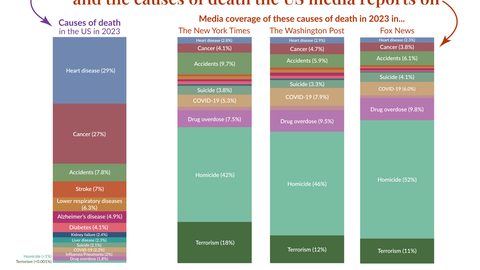 Media bias: how to read news from different outlets
-
 Native advertising vs journalism
-
 Sponsored content and influencer disclosure: how to spot ads
-
 Stereotypes in media: how representation shapes attitudes
How media representation shapes attitudes and reinforces stereotypes, with Singapore examples and critical-viewing steps to recognise framing and omission.
Stereotypes in media: how representation shapes attitudes
How media representation shapes attitudes and reinforces stereotypes, with Singapore examples and critical-viewing steps to recognise framing and omission.
-
 Understanding news ownership and funding
How to find out who owns and funds Singapore news outlets, why ownership matters for judging information, and how to spot advertorial versus editorial content.
Understanding news ownership and funding
How to find out who owns and funds Singapore news outlets, why ownership matters for judging information, and how to spot advertorial versus editorial content.
Common Questions
How is algorithmic curation different from advertising?
Algorithmic curation is the service's process of selecting what to show you based on your behaviour. Advertising is material that someone paid to place in front of you. The two overlap because services sell ad placements that are targeted algorithmically, and because paid posts created by influencers are both advertising and algorithmically distributed.
Do Singapore's influencer disclosure rules apply to all platforms?
Yes, the Singapore Code of Advertising Practice applies to all advertising in Singapore, including influencer marketing on any service. The requirement is that paid partnerships must be clearly and prominently disclosed. Enforcement is handled by the Advertising Standards Authority of Singapore under the Consumers Association of Singapore.
What is the difference between a POFMA correction direction and a takedown order?
A correction direction requires a service or person to publish a correction alongside the false statement. A takedown order requires the false statement to be removed. Both are legally enforceable, and non-compliance carries fines. A correction direction leaves the original post visible but adds a correction notice. A takedown order removes it entirely.
How do I recognise sponsored content if the influencer does not disclose it?
Without disclosure, you cannot be certain. Look for signs: a product featured prominently with a link, language that sounds like a sales pitch rather than a personal opinion, or a post that is part of a series from multiple people featuring the same product at the same time. These are not proof, but they are reasons to be sceptical.
Can I trust fact-checking organisations in Singapore?
Singapore has three main fact-checking organisations: Black Dot Research (founded 2022), Factually (a government portal launched in 2012), and AFP Fact Check Singapore (active since 2019). Black Dot Research and AFP Fact Check are signatories to the International Fact-Checking Network code of principles, which requires nonpartisanship, transparency of sources and funding, and a published methodology. Factually is a government publication and is not an IFCN signatory.
Read next
-
Echo chambers and filter bubbles: are they real?
-
Understanding news ownership and funding
How to find out who owns and funds Singapore news outlets, why ownership matters for judging information, and how to spot advertorial versus editorial content.
-
Media bias: how to read news from different outlets
-
Stereotypes in media: how representation shapes attitudes
How media representation shapes attitudes and reinforces stereotypes, with Singapore examples and critical-viewing steps to recognise framing and omission.
-
Native advertising vs journalism
-
Sponsored content and influencer disclosure: how to spot ads