Using Wikipedia Responsibly for Fact-Checking: What the Encyclopedia Is Good For and What It Is Not
Using Wikipedia Responsibly for Fact-Checking: What the Encyclopedia Is Good For and What It Is Not
You have a forwarded message claiming the Health Sciences Authority just recalled a batch of paracetamol. The person who sent it says they saw it on the news. The fastest way to check is to open Wikipedia. The fastest way to check responsibly is to open Wikipedia and then close it again. The encyclopedia is a starting point for investigating a source, not the endpoint for verifying a claim. Treat it as a map to the evidence, not the evidence itself.
What Wikipedia Is Good For: The Starting Point
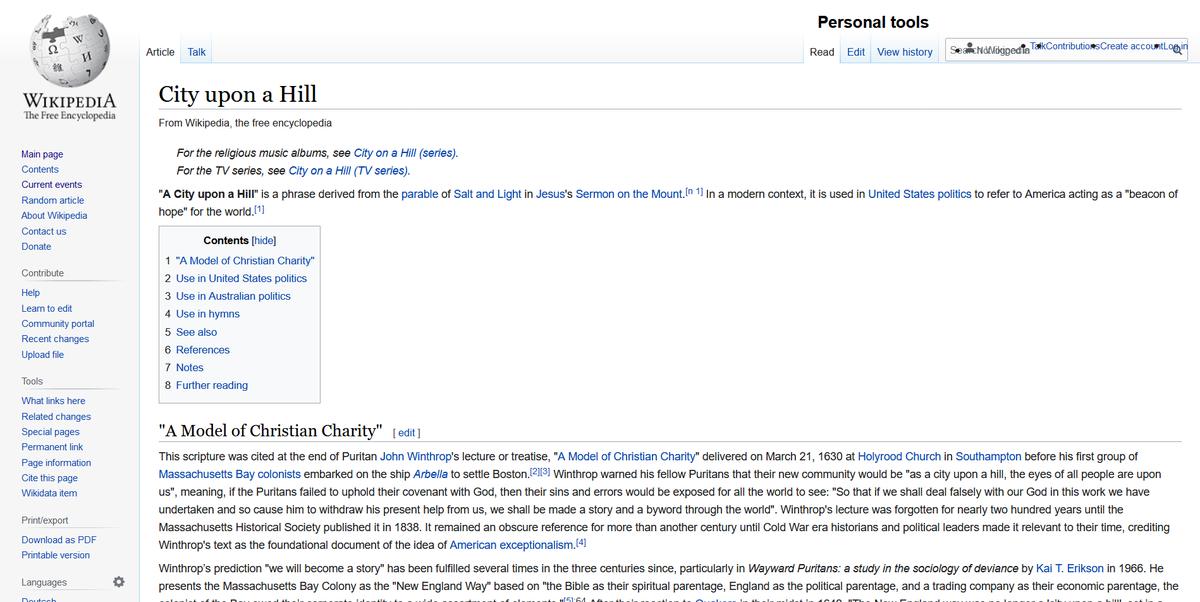
Wikipedia is a tertiary source: it summarises what other people have already published, and it is forbidden by its own core content policies from asserting anything new. The verifiability policy says information must be attributable to a reliable published source, not that it must be true. The no original research policy means editors cannot add their own analysis, synthesis, or interpretation. The neutral point of view policy requires articles to describe competing views without endorsing any of them. That makes the encyclopedia excellent for one job and poor for another. Good: surveying what the landscape of claims and counterclaims looks like on any given subject. Bad: telling you which of those claims is actually correct when the sources disagree.
When a fact-checker at the Stanford History Education Group looks at a Wikipedia entry, they are not there to learn the topic. They are there to learn about the sources cited under it. This is the lateral reading move: instead of scrolling the page for answers, open new tabs to check the bottom of the entry first. The references list is the only part of the page that matters for verification. It contains the raw material, the primary and secondary evidence, that you can go check yourself. A claim with no reference attached is a red flag. A claim attached to a dead link, a blog, or a self-published work is a bigger one. Your job is to follow those citations upstream, not to take the entry's word for it.
Reading The Warning Signs
Wikipedia's limits expose themselves the moment you look at the references list and find nothing there. A [citation needed] tag, the superscript that appears after an unsupported claim, is the encyclopedia admitting that a statement has stood without a reliable source, sometimes for years. That tag is not a judgment that the claim is false. It is a judgment that the claim is unverified. Two different things. When you see one, you have two options: find the evidence yourself, or treat the claim as unsupported and move on. The same logic applies to the page history and the talk page. The history shows you every edit, timestamped and attributed to a username or an IP address. A page vandalised three hours ago and reverted within ten minutes carries a different evidentiary weight than one with a stable record of careful editing. The talk page shows you the editorial disputes. If editors are arguing about whether a reference is reliable or whether a statistic belongs in the entry at all, that page is a witness to the fact that the content is contested.
Singapore Topics: Uneven Coverage
Wikipedia's reliability for Singapore topics varies sharply by subject. The English Wikipedia holds more than 6.9 million entries, but coverage of the island is thin in places. What exists is often written by a small number of editors with uneven enthusiasm. A well-trafficked topic like the history of Singapore's independence will have solid sourcing and active dispute resolution. A niche subject, a local politician's constituency office, a neighbourhood association's dispute, a small company's product recall, may have a stub of a few sentences and a single reference no one has checked in years. The page's lock icon is a good first signal. A semi-protected page has been edited by enough vandals that the Wikimedia Foundation restricted new accounts, which suggests the topic attracts contention. An extended-confirmed lock, requiring a 30-day-old account with 500 edits, is a stronger sign. None of those locks tell you the content is correct. They only tell you who is allowed to change it. The rating system, Stub, Start, C, B, Good Article, Featured Article, helps, because a Good Article has been reviewed against a published set of criteria covering verifiability, broad coverage, and neutrality. But a rating is not a badge of truth. It is a badge of process. A featured entry can still be wrong if its sources were wrong.
Interrogating A Citation
The references and citations check is the step most readers skip. That is exactly why it separates a responsible user from a lazy one. Open any entry and scroll to the bottom. You will find a list of numbered references. Click one and you will see the title, publisher, date, and URL. Now ask three questions. First: is the source real? Second: does the source actually say what the entry claims it says? A surprising number of citations are attached to statements the reference does not support, either because the editor made an error or because the link was added as a redirect trap. Third: is the source primary, secondary, or tertiary? A primary source is an original document: a court ruling, a research paper, a transcript of a speech. A secondary source analyses or interprets primary material: a news report, a biography, a review. A tertiary source summarises secondary ones: an encyclopedia, a textbook, a database. Wikipedia is allowed to cite all three, but the policy prefers secondary references for most claims since they are more likely to be neutral and accurate. When you find an entry that hangs almost entirely on primary material, a company's own website, a government press release, a patent filing, that is a sign the entry is describing what a subject says about itself, not what independent observers have concluded.
Lateral Reading: Leave The Page
Lateral reading should be printed on the front page of the site. The researcher Sam Wineburg and his team at Stanford have documented that professional fact-checkers read differently from everyone else. They leave the entry almost immediately, open new tabs, and search for a source's reputation before they read a single paragraph of its claims. This is the SIFT method, developed by the fact-checking researcher Mike Caulfield: Stop, Investigate the source, Find better coverage, and Trace claims to the original context. Wikipedia fits into that method at the Stop stage and the Investigate stage. You stop. You open the entry. You use it to find out who is saying what, and what the contested points are. Then you follow the references to the original reporting, the academic paper, or the government document, and you judge the claim against those. The Wikipedia entry itself should never be the last thing you read. It should be the first. The reverse, reading one entry, accepting every sentence, and sharing the link as proof, is the move of someone who has not learned how the internet actually works.
Primary, Secondary, Tertiary: Why The Chain Matters
The distinction between primary, secondary, and tertiary material is not academic pedantry. It is the foundation of responsible verification. A primary source is the raw material: a police report, a research dataset, a parliamentary record, a witness's statement. A secondary source is a journalist or researcher interpreting that raw material: a news report quoting the police report, a meta-analysis of the dataset, a biography of the parliamentarian. A tertiary source is a summary of summaries: an encyclopedia entry that cites the news report and the biography. When you fact-check a claim, you want to find the primary material if you can, because that is where the evidence lives. If you cannot find it, if all you have is a tertiary source citing a secondary source citing a primary document you cannot locate, then you have found a verification gap. The claim may be true. You have no way to know. This is why Wikipedia's own policy says verifiability, not truth. The site is not in the business of determining what is actually correct. It is in the business of documenting what reliable references say. When those references conflict, the entry says so, and it is your job to figure out who is right.
Hoaxes And Honest Errors
Wikipedia hoaxes happen. They are not rare. The death of a Belgian politician announced on Wikipedia before it was confirmed. The fabricated entry about a nonexistent medieval scholar that survived for years. These are cautionary tales for anyone who treats the site as an authority. But the deeper problem is not the deliberate hoax. It is the honest error. An editor reads a 30-year-old newspaper report, misreads a name or a date, and types it into the encyclopedia in good faith. The error propagates through the web because every other site scrapes Wikipedia, and soon the false fact appears on government websites, corporate blogs, and AI-generated content farms. This is the source of the instruction to never cite Wikipedia in an academic paper. Not because the site is useless, but because the chain of custody from the primary material to the Wikipedia sentence is too long and too easily broken. When you check a reference, you are not just confirming that a citation exists. You are confirming that the citation says what the entry claims it says, and that the claim has not been distorted in the retelling. That is the work most readers never do. That is exactly why it is the work that makes you a better verifier than the crowd.
Faster Paths For Singapore Claims
For claims that touch Singapore, the local fact-checking landscape offers a more authoritative path than Wikipedia. The government portal Factually, run under the Ministry of Digital Development and Information, publishes clarifications on false claims circulating locally and is the official voice on what the state considers misinformation. Black Dot Research, an independent Singapore-based organisation, publishes its own verifications with a methodology statement and a corrections policy. It is a signatory to the International Fact-Checking Network's code of principles, which commits it to non-partisanship, transparency of sources and funding, and open corrections. The Straits Times runs CheckMate, a fact-checking column that verifies claims in public circulation and publishes its process alongside its verdicts. Channel NewsAsia's Sure Anot segment does similar work for viral claims on WhatsApp and Telegram. None of these replace the work you do yourself: checking the original source, looking for the primary document, asking whether the claim has been independently verified. But they are faster than building your own evidence base from scratch. When a claim is about Singapore, start with these, not with the Wikipedia entry. The entry may have been written by someone who has never set foot in the country and does not know the difference between a government agency and a statutory board.
What The Talk Page Reveals
The talk page of a Wikipedia entry is where the editorial arguments live. Reading it is the single best way to find out whether the entry is reliable. Editors use the talk page to dispute a claim, to challenge a reference, to warn that an entry is biased, and to signal that a particular edit should not be reverted without discussion. When you open a talk page, you are looking for three things: active disputes, unresolved warnings, and edit warring. An active dispute means the content is contested. Treat it with suspicion. An unresolved warning, a banner saying the entry has issues with neutrality or sourcing, is a direct instruction to find another reference. Edit warring, where two editors keep reverting each other's changes, is a sign that the topic is politically or commercially sensitive and that the entry may be the target of coordinated editing. You do not need to read the entire back-and-forth. You just need to see that the argument exists. If you find an entry with a busy talk page, you have found an entry that is doing its job: it is showing you where the evidence is thin. The opposite problem is the entry nobody has looked at for years, with a talk page empty of discussion and a history that stops abruptly. That entry may be perfectly accurate. You have no reason to believe it is, and no signal that anyone is checking.
A Five-Minute Method For A Single Claim
Here is the sequence for using Wikipedia responsibly on a single claim. First, search the claim and read the lead section to see how the topic is framed. Second, scroll to the bottom and look at the references list. Pick the two or three references cited for the specific claim you care about. Third, open those sources in new tabs. If a citation is dead, use the Internet Archive's Wayback Machine to find a saved copy. If the source is behind a paywall, search for the title to find a free version. Fourth, read the source's own words and ask whether it says what the entry says it says. Fifth, search the source's title and publisher to check its reputation. Is it a real news organisation, a government body, an academic journal, or a blog written by someone with an agenda? Sixth, repeat the process for any claim that lacks a citation, but do so knowing that you are now doing original research, and that you have no obligation to trust any of it. Finally, if the claim is about Singapore, check Factually, Black Dot Research, CheckMate, or Sure Anot for an existing verdict before you spend your own time. This method takes about five minutes per claim. It will cost you time. It will also save you from being the person who forwards a hoax to the family group chat.
Wikipedia is not for everyone, and it is not for every claim. It suits the traveller who needs a quick orientation to a topic, the history of a neighbourhood, the plot of a movie, the biography of a public figure, and who knows to follow the references when the stakes are high. It suits the student learning to distinguish a tertiary source from a primary one who has been taught the SIFT method. It suits the reader who understands that a lock icon means protection, not endorsement, and that a Good Article rating describes the editing process, not a guarantee of truth. It does not suit the reader who wants a single click to verify a forwarded claim. That reader will be disappointed. It does not suit the reader who believes everything on the internet. Wikipedia will confirm that belief too often. And it does not suit the reader who needs to know whether a claim about Singapore is true today, this hour. The encyclopedia lags behind the news cycle and the local fact-checkers are faster and more authoritative. If you are that reader, start with the specialists and come back to Wikipedia to understand the background. If you are the other reader, the one who wants to learn how to think, Wikipedia remains the best free schoolroom on the internet, provided you remember that the teacher is the sources, not the page.
- Owner: Wikimedia Foundation, a US-based non-profit
- English articles: Approximately 6.9 million, revised annually by the Wikimedia Foundation
- All-language articles: Approximately 64 million, revised annually by the Wikimedia Foundation
- Editing model: Anyone can edit, with or without an account
- Core content policies: Neutral point of view, verifiability, and no original research
- Lock icon meaning: Semi-protection (4+ days old, 10+ edits) or extended-confirmation protection (30+ days, 500+ edits)
- Citation needed tag: Marks a claim that lacks a reliable source
- Good Article criteria: Well-written, verifiable, broad, neutral, stable, and illustrated where appropriate
- Featured Article criteria: All Good Article criteria plus professional writing, presentation, and sourcing standards
- Best use: Finding primary and secondary sources via the reference list, not as a final authority
- Singapore local alternative: Factually, Black Dot Research, CheckMate, and Sure Anot for faster, more authoritative verdicts
One more failure mode is worth naming. It is the most common and the most corrosive. The reader checks Wikipedia, finds a citation that supports the claim, and stops, without ever opening that citation to see whether it actually exists. This is the single-source settlement, and it is how hoaxes survive on the internet. A fabricated citation, or a real citation twisted to support an unrelated claim, will pass the lazy check. The only defence is the one you have been building: open the source, read it, and judge for yourself. If you are not willing to do that, you are not fact-checking. You are collecting confirmations. The difference between those two behaviours is the difference between a responsible reader and a credulous one, and it is the difference that will determine whether you are the one who spreads the next hoax or the one who stops it.