Fake News Classroom Activities: Games and Exercises for Building Verification Habits
Ready-to-run classroom activities that teach Singapore students verification habits using the S.U.R.E. framework, lateral reading, and real local falsehood examples.
Fake News Classroom Activities Singapore: Start With A Forwarded WhatsApp Message
Stop. Do not forward that message. The most common vector for false information in Singapore is a forwarded-as-received message on WhatsApp. A 2024 survey by the National Library Board found that 68% of Singaporeans receive unverifiable forwarded messages at least weekly. The S.U.R.E. checklist, Source, Understand, Research, Evaluate, gives you a repeatable process to handle one of those messages in under three minutes. These classroom activities build that habit in students aged 11 to 18, using real examples from Factually and Black Dot Research.
Each activity names the specific verification skill it builds, the age range it suits, and a real Singapore falsehood from public records. No special materials are needed. Run any of them tomorrow.
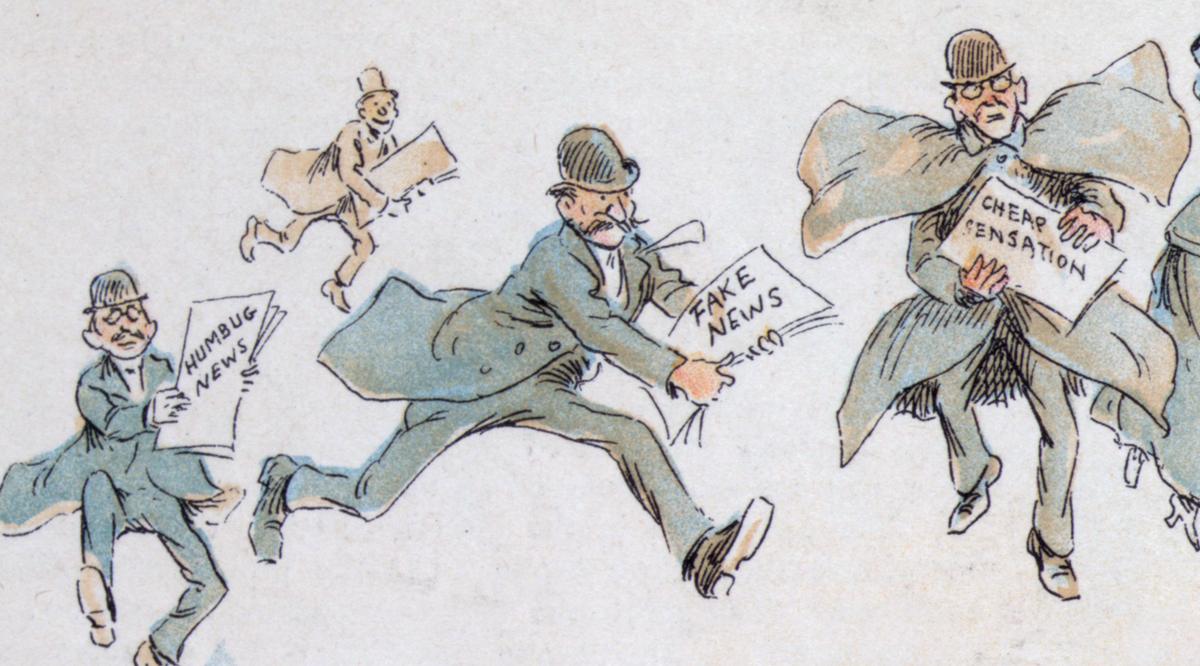
Media Literacy Games For Students: The Headline-Body Mismatch Game
Skill: Lateral reading. Ages: 11-14. Time: 20 minutes.
Print or display a series of headlines alongside their article bodies, but mismatch them. Take a 2023 Black Dot Research investigation: the headline read “MOH Confirms New COVID-19 Cluster in Jurong” but the actual article body was a general advisory about vaccination. Students must open new tabs to check whether the headline matches the source content. Use a real example from Factually: a 2024 false claim that “Singapore Post Will Deliver All Packages for Free in December” was paired with a legitimate SingPost press release about seasonal surcharges. The headline-body mismatch is one of the most common cheapfake techniques. It spreads faster than a correction.
Failure case: Students trust the headline because it looks official. Enforce the rule that no one shares or upvotes until they have opened the article itself.
The Source Transparency Audit
Skill: Source checking using the S.U.R.E. steps. Ages: 14-18. Time: 30 minutes.
Give each student a forwarded-as-received message from a known Singapore scam or falsehood. A 2024 example: “URA Announces Free Parking Island-Wide for Deepavali”, a fabricated message that circulated on Telegram. Students apply the four steps in order. Source: Who originally posted this? Understand: What is the claim asking me to do? Research: Find the official URA website or press release. Evaluate: Does the official source match the forwarded message?
Why The Checklist Works
This exercise replaces the vague instruction “be sceptical” with four concrete questions. The National Library Board updated the S.U.R.E. steps in 2024 to include an AI literacy component: Spot signs of AI-generated content, Understand safeguards, Review content critically, Evaluate sources. Use that extension when the forwarded message contains a deepfake or AI-generated image.
Failure case: Verification bypass. Students read the message, say “this seems fake,” and then share it anyway with a comment. The rule: you do not share until you have completed all four steps.
Teaching Lateral Reading To Students: The Reverse Image Search Lab
Skill: Reverse image search and lateral reading. Ages: 11-18. Time: 25 minutes.
Provide an image that has been recycled out of context. A real example from Black Dot Research: a 2024 photo of a flooded MRT station that was actually a 2022 image from Jakarta, captioned as “Sengkang MRT During Heavy Rain.” Students open Google Images or TinEye in a new tab and drag the image in. They see the earliest publication date and the original context.
Leave The Page
Teaching lateral reading means training students to leave the page they are on. The Stanford History Education Group’s Civic Online Reasoning curriculum defines it as opening new browser tabs to verify source credibility before engaging with content. The three core questions are: Who is behind the information? What is the evidence? What do other sources say?
Failure case: Single-source settlement. A student finds one website that uses the same image and decides that confirms it. Require at least three independent sources showing the original context.
| Activity | Skill | Age Range | Real Example From Factually / Black Dot Research | Time (Minutes) |
|---|---|---|---|---|
| Headline-Body Mismatch | Lateral reading | 11–14 | SingPost free delivery falsehood (Factually, 2024) | 20 |
| Source Transparency Audit | S.U.R.E. steps | 14–18 | URA free parking hoax (Black Dot Research, 2024) | 30 |
| Reverse Image Search Lab | Reverse image search | 11–18 | Sengkang MRT flood image (Black Dot Research, 2024) | 25 |
Fake News Detection Activity Secondary School: The Emotional Override Drill
Skill: Recognising confirmation bias and emotional override. Ages: 14-18. Time: 15 minutes.
Display a message designed to provoke anger or fear. A 2024 example from Factually: “CPF Board to Deduct 5% From All Accounts for National Defence.” The message played on fears about national service and retirement savings. Students must identify which emotion the message targets, anger, fear, or hope, and then complete the S.U.R.E. steps before they can discuss whether the claim is true. The CPF Board had issued no such statement.
This drill teaches that emotional override is the primary failure mode for verification. The Singapore Police Force Anti-Scam Command notes that impersonation scams include urgency phrases like “act now” or “your account will be closed.” The emotional response short-circuits the verification step.
Failure case: A student argues that “it feels true because it matches what I already think.” Point out that this is confirmation bias and that the S.U.R.E. checklist exists precisely to test claims that feel true.
Building Verification Habits Beyond The Classroom
The goal of these activities is not to make students distrust everything they see. It is to replace the default behaviour, believing and sharing, with a practised habit: check the source, understand the claim, research the evidence, evaluate the match. The S.U.R.E. checklist from the National Library Board is the most durable tool for this. It does not depend on any specific technology. Lateral reading works on any platform. Reverse image search works on any image.
The Two That Matter Most
The Source Transparency Audit and the reverse image search lab build the most transferable skills. Students who complete both can verify a forwarded-as-received message in under three minutes. They spot a headline-body mismatch. They recognise when an image has been recycled out of context. They understand that a deepfake or AI-generated image requires different verification tools than a text-based claim.
Who This Is For
These activities suit classroom teachers, parents running a home workshop, and community leaders leading a digital literacy talk. They do not suit someone looking for political commentary or activist calls to action. They do not suit someone who wants official government communications or legal advice. They suit anyone who receives an alarming forwarded message and wants a reliable way to know if it is true before sharing.
The single thing that most often goes wrong: students complete the activity but do not transfer the habit to their own phones. Repeat the exercise monthly with new examples from Factually and Black Dot Research. Repetition builds habit. Habit beats emotional override.
Common Questions
What is the S.U.R.E. checklist and how do I use it in class?
S.U.R.E. stands for Source, Understand, Research, Evaluate. It is a four-step information literacy process developed by the National Library Board in 2013 and updated in 2024 with an AI literacy component. In class, students apply each step to a forwarded message: identify the source, understand the claim, research using official channels, and evaluate whether the evidence supports the claim.
Where can I find real Singapore falsehood examples for these activities?
Use Factually (the government fact-checking portal), Black Dot Research (an independent fact-checking organisation), CheckMate (The Straits Times column), and Sure Anot (CNA's fact-checking segment). All four publish verified cases with named sources.
How do I teach lateral reading to students who only use one device?
Lateral reading requires opening new tabs. On a single screen, students can use split-screen mode or write down the source URL and check it on a second device. The key behaviour is leaving the original content before believing it.
What age is appropriate for deepfake detection activities?
Deepfake and cheapfake detection suits students aged 14 and above. For younger students, focus on reverse image search and source checking. The National Library Board's S.U.R.E. AI literacy component provides age-appropriate language for discussing synthetic media.
How do I handle a student who shares a false claim during the activity?
Use it as a teaching moment. Ask the student to apply the S.U.R.E. steps to their own shared message. The goal is to build the habit of verification before sharing, not to punish mistakes. The failure mode to watch for is verification bypass, sharing with a question attached.
Can I run these activities without internet access in the classroom?
Yes. Print the forwarded messages, the S.U.R.E. checklist, and screenshots of official sources. Students can complete the exercise on paper. The reverse image search lab requires internet, but you can prepare printed image search results in advance.
How do these activities relate to Singapore's POFMA law?
POFMA (Protection from Online Falsehoods and Manipulation Act) is a legal mechanism that can compel correction or removal of false statements of fact. These activities teach the verification skills that help students avoid spreading falsehoods that could trigger a POFMA correction direction. Fact-checking is a journalistic practice; POFMA is a statutory process.
.jpg)